
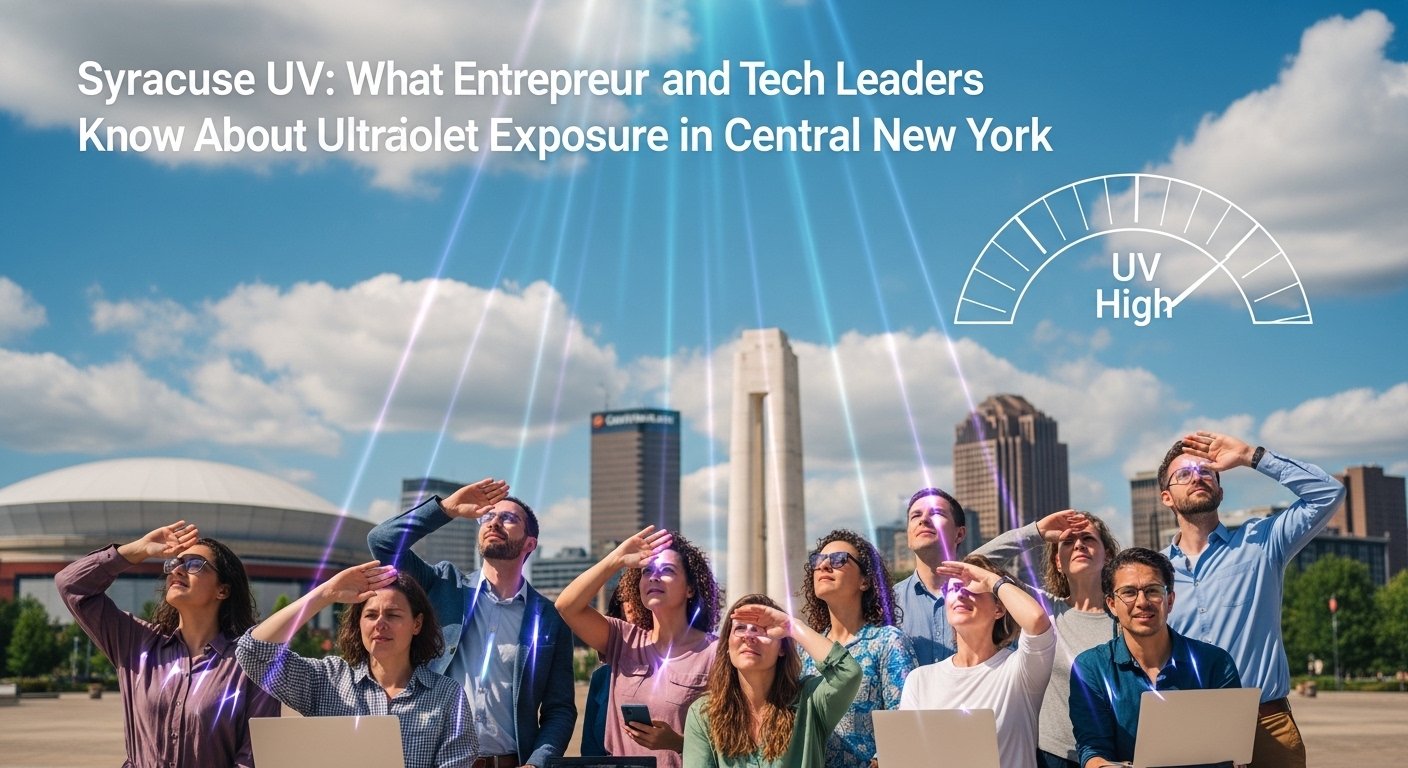
On a bright April afternoon in Syracuse, a startup founder stepped out of a coworking space near Armory Square for a quick walking meeting. The temperature hovered in the low 50s. The air still carried a hint of winter. No one thought about sunscreen. Yet by evening, there was a faint redness on their face—a subtle reminder that Syracuse UV levels don’t always align with how warm the day feels.
In Central New York, ultraviolet radiation is often overlooked. The city is known for lake-effect snow, overcast skies, and long winters. But UV exposure operates independently of temperature and, at times, even cloud cover. For entrepreneurs, tech professionals, and founders who value performance, longevity, and informed decision-making, understanding Syracuse UV patterns is more than a health footnote. It’s environmental awareness in action.
This article explores how ultraviolet radiation behaves in Syracuse, why it matters even in colder climates, and how professionals can integrate UV awareness into a high-performance lifestyle.
Understanding Syracuse UV Beyond the Weather Report
When we talk about Syracuse UV, we are referring to the ultraviolet index (UV Index) recorded in the Syracuse, New York region. The UV Index is an international measurement scale that indicates the strength of ultraviolet radiation from the sun at a specific time and location.
Ultraviolet radiation consists primarily of UVA and UVB rays. UVA rays penetrate deeply into the skin and contribute to premature aging. UVB rays are responsible for sunburn and play a significant role in skin damage. The UV Index typically ranges from 0 (low) to 11+ (extreme).
In Syracuse, the UV Index varies dramatically throughout the year due to seasonal shifts in sun angle, atmospheric conditions, and surface reflection from snow. While winter UV levels are generally low, spring and summer bring moderate to high readings that often catch residents off guard.
For founders and professionals who track data in every other aspect of life—metrics, KPIs, financial forecasts—monitoring UV levels is simply another environmental variable worth understanding.
Seasonal Patterns of Syracuse UV
Syracuse’s location at approximately 43 degrees north latitude creates pronounced seasonal shifts in sunlight intensity. The sun’s angle relative to the Earth significantly affects UV strength.
During winter months, UV levels often remain between 0 and 2. However, snow cover introduces a critical factor: reflection. Fresh snow can reflect up to 80 percent of UV radiation, effectively increasing exposure, especially for skiers, runners, or anyone spending extended time outdoors.
Spring brings a sharp transition. As daylight hours extend and the sun climbs higher in the sky, Syracuse UV levels rise quickly—often reaching moderate levels before temperatures feel “summery.” This seasonal mismatch between temperature and radiation intensity leads to underestimation of exposure.
Summer represents peak UV intensity. Clear skies and long daylight hours can push the UV Index into the 6 to 8 range on sunny days. While Syracuse rarely reaches extreme levels seen in equatorial regions, consistent summer exposure can accumulate quickly.
Autumn gradually reduces UV intensity, yet early fall afternoons still produce moderate readings.
Below is a simplified seasonal overview:
| Season | Typical UV Index Range | Key Risk Factors |
|---|---|---|
| Winter | 0–2 | Snow reflection |
| Spring | 3–6 | Rapid seasonal increase |
| Summer | 6–8 | Long daylight exposure |
| Fall | 2–5 | Clear transitional days |
Understanding these patterns enables better planning for outdoor work, networking events, and recreational activity.
Why Syracuse UV Matters for High-Performance Professionals
Entrepreneurs and tech leaders often optimize sleep, nutrition, and productivity tools. Yet environmental exposure rarely enters the conversation.
Ultraviolet radiation impacts skin health, energy levels, and long-term well-being. Even mild sunburn triggers inflammation, dehydration, and fatigue—conditions that subtly undermine focus and cognitive performance.
Outdoor meetings, startup festivals, campus recruitment events at Syracuse University, and casual networking on sunny patios are common during warmer months. Without awareness of Syracuse UV levels, cumulative exposure becomes an invisible performance tax.
Strategic living includes environmental awareness. Just as founders hedge financial risk, they can also mitigate exposure risk.
The Cloud Cover Myth in Central New York
Syracuse ranks among the cloudiest cities in the United States. This fact creates a persistent misconception: cloudy days equal safe UV levels.
In reality, UV radiation penetrates cloud cover, especially UVA rays. Thin clouds can scatter UV rays, sometimes intensifying localized exposure. A cool, gray afternoon may still carry moderate UV intensity.
For professionals who assume overcast conditions eliminate risk, this misunderstanding leads to inconsistent protection habits.
Checking daily UV forecasts—available through most weather apps—takes seconds and provides actionable insight.
Remote Work and Outdoor Flexibility
Hybrid and remote work models have increased time spent outdoors. Coffee shop patios, park benches, and rooftop coworking spaces are part of modern work culture.
This flexibility enhances creativity and well-being. However, it also increases incidental exposure to Syracuse UV conditions. Unlike indoor offices with filtered glass, outdoor environments provide minimal shielding.
Professionals who regularly work outside can adopt small but effective habits: wearing UV-protective sunglasses, applying broad-spectrum sunscreen during peak months, and scheduling extended outdoor activities outside peak UV hours (10 a.m. to 4 p.m.).
These adjustments preserve health without sacrificing lifestyle freedom.
Environmental Variables That Influence Syracuse UV
Several factors shape UV intensity in Central New York beyond seasonality.
Altitude plays a minor but measurable role. While Syracuse is not mountainous, even modest elevation changes can affect exposure slightly.
Ozone concentration influences how much ultraviolet radiation reaches ground level. Atmospheric conditions fluctuate seasonally and regionally.
Surface reflection amplifies exposure. Snow, water bodies like Onondaga Lake, and light-colored urban surfaces can reflect UV rays upward.
Understanding these environmental dynamics aligns with a data-driven mindset. Founders accustomed to analyzing market forces can apply similar logic to natural variables.
Long-Term Health Considerations
Repeated ultraviolet exposure contributes to premature skin aging, hyperpigmentation, and increased risk of skin cancer. Eye health is also affected, with prolonged exposure increasing the likelihood of cataracts and other conditions.
While Syracuse may not evoke images of intense sun, cumulative exposure across years still matters.
High-performance professionals often plan for long-term growth. Protecting health is an investment in sustained productivity.
Technology and Syracuse UV Monitoring
Technology simplifies environmental awareness. Smartphone apps display daily UV Index forecasts. Wearables now track sun exposure duration. Smart home systems integrate real-time weather alerts.
Entrepreneurs who rely on dashboards for business performance can incorporate UV data into daily routines.
Data-driven living is not limited to revenue metrics. It extends to personal resilience.
Climate Trends and Future Implications
Climate change is altering seasonal patterns across New York State. Warmer springs and longer summers may extend periods of moderate to high UV intensity.
While Syracuse will likely remain cooler than many U.S. regions, incremental shifts matter. Earlier seasonal transitions can increase exposure windows.
Urban planning, outdoor event scheduling, and corporate wellness initiatives may increasingly factor in UV awareness as part of climate adaptation strategies.
Practical Adaptation Without Overreaction
Addressing Syracuse UV does not require drastic measures. It requires consistency.
Daily UV checks during spring and summer establish awareness. Protective eyewear safeguards vision during extended outdoor activity. Strategic scheduling reduces peak-hour exposure.
These small adjustments mirror the philosophy of incremental optimization familiar to entrepreneurs: marginal gains compound over time.
Conclusion: Environmental Intelligence as Strategic Advantage
The founder who once underestimated a cool April afternoon now glances at the UV Index each morning. It’s a small habit, but one rooted in awareness.
Syracuse UV levels fluctuate with season, cloud cover, and reflection. They are often subtle, rarely extreme, but consistently present. For entrepreneurs and tech leaders building long-term ventures in Central New York, environmental intelligence enhances resilience.
Success depends not only on market insight and technical skill but also on sustained health and focus. Understanding local UV patterns is part of that equation.
The sun may not always feel strong in Syracuse. But it is always there—quietly shaping the environment in which we live and work.