On a late Friday evening, a founder stared at a whiteboard filled with numbers. Revenue targets. Hiring goals. Retention rates. Growth was happening—but unevenly. Some teams were outperforming expectations, others were drifting. The compensation model felt flat, reactive, and uninspiring.
That moment is where conversations about a package scheme of incentives often begin. Not as a theoretical HR concept, but as a strategic lever for alignment, motivation, and sustainable performance.
For entrepreneurs, tech leaders, and founders scaling organizations, incentive structures are not administrative details. They are behavioral architecture. They shape priorities, reinforce culture, and determine how energy flows across a company.
When designed thoughtfully, a package scheme of incentives becomes more than compensation. It becomes strategy in action.
Understanding the Package Scheme of Incentives
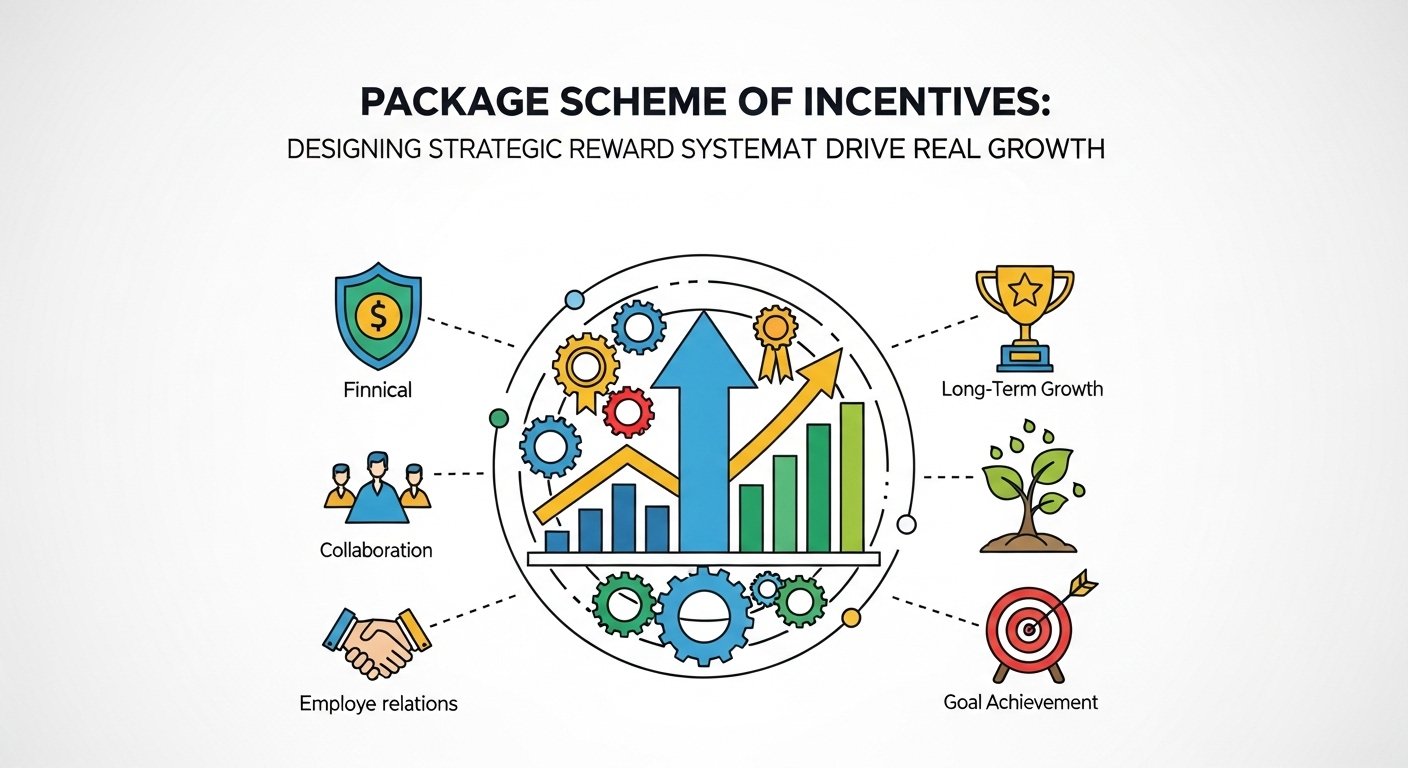
A package scheme of incentives refers to a structured combination of financial and non-financial rewards designed to motivate employees, executives, or partners toward specific goals. Unlike a single bonus or commission, it operates as a cohesive framework aligned with organizational objectives.
The “package” element is critical. It implies integration. Base salary, performance bonuses, equity, benefits, recognition programs, and long-term rewards work together rather than independently.
For founders navigating growth stages, this integration ensures that incentives reinforce both short-term milestones and long-term vision.
An effective scheme answers a fundamental question: what behaviors are we rewarding, and do they align with our strategic direction?
Why Incentive Architecture Matters for Scaling Companies
In early-stage startups, motivation often stems from mission and momentum. As companies scale, informal enthusiasm alone cannot sustain performance.
At scale, clarity becomes essential. Teams need transparent criteria linking contribution to reward. Without it, misalignment emerges.
A well-designed package scheme of incentives influences:
Employee retention
Productivity and performance
Cross-functional collaboration
Long-term loyalty
Risk-taking and innovation
Incentives do not simply reward outcomes; they signal priorities. If revenue alone is incentivized, culture may skew toward short-term gains. If innovation and collaboration are embedded, behavior follows accordingly.
For entrepreneurs, incentives are not afterthoughts. They are structural tools.
Components of a Comprehensive Incentive Package
A strategic package scheme of incentives blends multiple elements to balance immediate performance with sustainable growth.
Financial components often include performance bonuses, commissions, profit-sharing arrangements, and stock options. Equity participation, particularly in tech startups, fosters ownership mindset.
Non-financial incentives add depth. Flexible work policies, professional development opportunities, leadership recognition, and wellness benefits reinforce culture and employee satisfaction.
Long-term incentives, such as vesting schedules or deferred bonuses, anchor loyalty.
The interplay between these elements determines effectiveness. Overemphasis on short-term cash rewards may drive burnout. Balanced structures sustain engagement.
Short-Term vs. Long-Term Incentives
The tension between immediate results and long-term value creation sits at the heart of incentive design.
Short-term incentives motivate quarterly or annual performance. They provide tangible reinforcement tied to measurable goals.
Long-term incentives, such as equity or multi-year bonus plans, encourage strategic thinking and commitment to company trajectory.
Below is a comparison illustrating how these elements function within a package scheme of incentives:
| Incentive Type | Focus | Impact Horizon | Behavioral Influence |
|---|---|---|---|
| Performance Bonus | Revenue or KPIs | Short-term | Results-driven focus |
| Commission | Sales volume | Immediate | Competitive energy |
| Equity Grants | Company valuation | Long-term | Ownership mindset |
| Profit Sharing | Organizational success | Medium-term | Collective alignment |
| Recognition Programs | Cultural values | Ongoing | Engagement & morale |
Effective packages integrate both horizons, ensuring balance.
Aligning Incentives With Company Stage
The design of a package scheme of incentives should reflect organizational maturity.
In early-stage startups, equity may outweigh cash incentives due to limited capital. Founders rely on shared belief in future growth.
Growth-stage companies often introduce structured performance bonuses and departmental KPIs.
Established organizations may adopt layered systems combining executive long-term incentives with team-based rewards.
Misalignment between stage and structure creates friction. A mature enterprise cannot rely solely on startup-style equity promises. Likewise, a young company cannot sustain overly complex bonus frameworks.
Strategic alignment ensures practicality and credibility.
Behavioral Economics and Incentive Design
Behavioral science offers valuable insight into why some incentive schemes fail.
Extrinsic rewards—money, bonuses, tangible perks—can drive performance, but overreliance may undermine intrinsic motivation. Employees motivated solely by financial gain may disengage when rewards plateau.
A sophisticated package scheme of incentives recognizes psychological drivers: autonomy, mastery, purpose.
Incorporating professional development opportunities, leadership visibility, and mission alignment strengthens intrinsic engagement.
Entrepreneurs who understand behavioral economics design systems that motivate sustainably rather than reactively.
Transparency and Trust
Even the most well-funded incentive scheme fails without transparency.
Employees must understand how rewards are calculated. Ambiguity breeds skepticism. Clear communication builds trust.
Founders often hesitate to disclose detailed compensation frameworks, fearing complexity. Yet clarity reduces speculation and fosters fairness.
Transparency does not require publicizing individual salaries. It requires clear criteria, measurable benchmarks, and predictable evaluation processes.
Trust is not built on generosity alone; it is built on consistency.
Common Pitfalls in Incentive Packages
Incentive structures can unintentionally distort behavior.
Overemphasis on sales targets may neglect customer retention. Aggressive growth incentives may compromise quality control. Individual bonuses can undermine team collaboration.
Regular evaluation of incentive outcomes prevents unintended consequences.
Founders should ask periodically: are we rewarding what truly drives sustainable growth?
Adjustment is not failure. It is refinement.
The Role of Technology in Managing Incentives
Modern HR platforms and performance management software streamline implementation of complex incentive schemes.
Real-time dashboards track KPIs, automate bonus calculations, and ensure compliance. Data analytics provide insight into performance trends and reward distribution.
For tech-savvy organizations, integrating incentive tracking with productivity tools enhances visibility and reduces administrative burden.
Technology does not replace thoughtful design, but it strengthens execution.
Cultural Impact of a Package Scheme of Incentives
Incentives shape culture subtly but profoundly.
A structure emphasizing collaboration reinforces teamwork. A model centered solely on individual performance fosters competition.
Founders must define cultural priorities before finalizing incentive architecture.
Culture emerges not from mission statements, but from rewarded behaviors.
Global and Regulatory Considerations
As startups expand internationally, incentive structures must adapt to regional regulations and cultural expectations.
Tax treatment of bonuses, equity compensation laws, and labor regulations vary significantly across jurisdictions.
Global founders should consult legal and financial advisors when extending a package scheme of incentives across borders.
Consistency in philosophy paired with flexibility in implementation ensures compliance and cohesion.
Conclusion: Incentives as Strategic Infrastructure
Back at that whiteboard, the founder erased scattered notes and began sketching a structured framework. The realization was clear: compensation is not a line item. It is infrastructure.
A well-designed package scheme of incentives aligns ambition with action. It bridges strategy and behavior. It sustains performance without sacrificing culture.
For entrepreneurs and tech leaders, incentives are not about generosity or control. They are about clarity.
When rewards reflect values and long-term vision, growth becomes intentional rather than accidental.
In competitive markets, talent seeks more than salary. It seeks alignment. And alignment begins with structure.
Design the architecture carefully. Performance will follow.