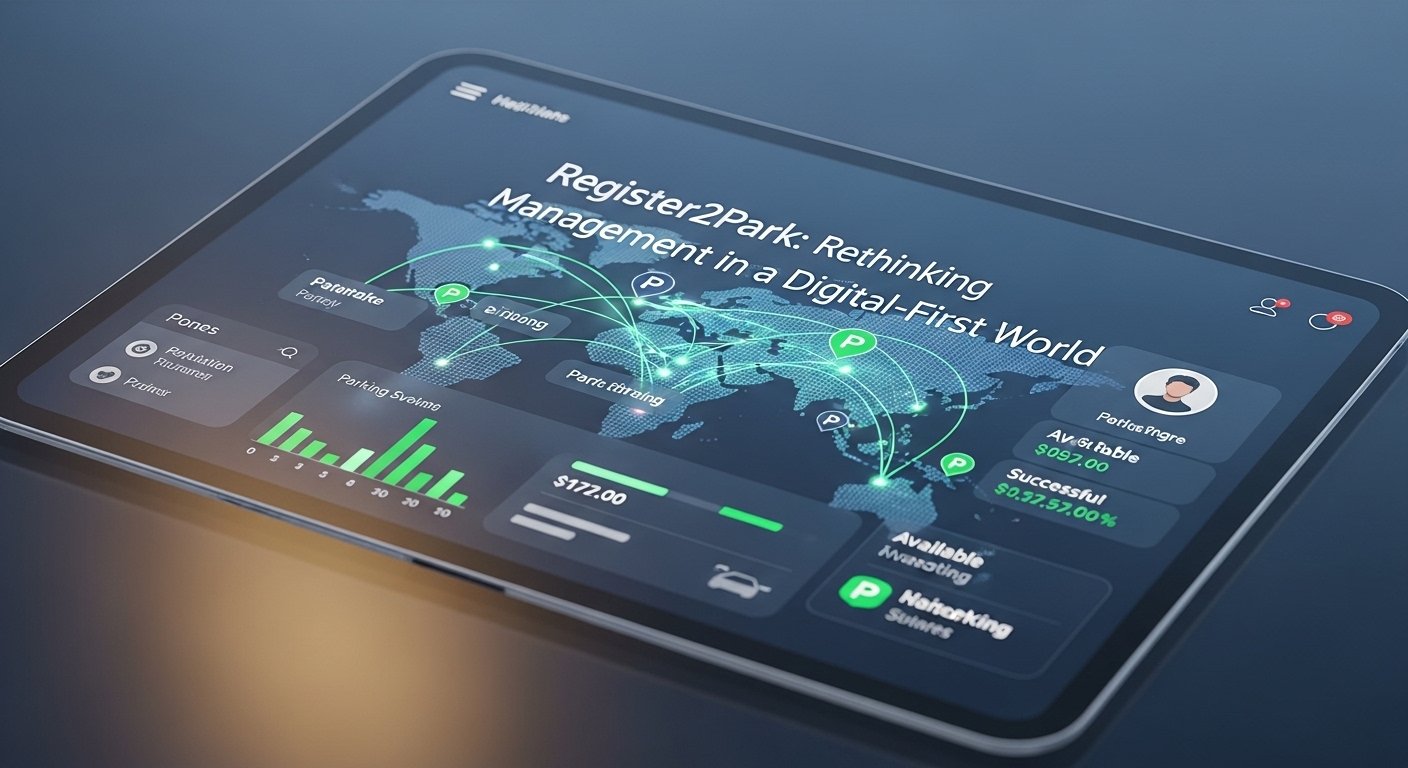
On a rainy Thursday evening, a startup founder pulled into the underground parking garage of a mixed-use development in London. Instead of fumbling for coins or scanning a faded QR code taped to a wall, she entered her license plate into a clean digital interface and received instant confirmation. No paper ticket. No dashboard slip. No guesswork. The system was seamless. The platform behind it? register2park.
At first glance, parking may not seem like fertile ground for innovation. Yet for property managers, entrepreneurs, and tech leaders, parking management represents a persistent operational challenge. Unauthorized vehicles, inefficient enforcement, resident complaints, and manual recordkeeping create friction. Platforms like register2park illustrate how even overlooked infrastructure can be transformed through thoughtful digitization.
For founders building smart property solutions or exploring PropTech opportunities, parking technology offers a compelling case study in digital efficiency.
Understanding Register2Park and Its Core Purpose
Register2park is a digital parking management platform designed to streamline vehicle registration and enforcement across private properties. Rather than relying on traditional paper permits or physical barriers, the system allows authorized users to register vehicles online, creating a centralized database accessible to property managers and enforcement teams.
The shift from physical permits to digital registration reduces administrative burden. Residents, guests, and employees can log vehicle details remotely. Property owners gain real-time visibility into usage patterns.
This approach aligns with broader trends in automation and access control. Just as office buildings moved from keycards to mobile credentials, parking systems are evolving toward digital authorization.
Why Parking Management Deserves Strategic Attention
For entrepreneurs managing residential complexes, coworking spaces, hospitals, or commercial properties, parking directly impacts user experience. Poor enforcement leads to frustration. Overly aggressive enforcement damages reputation.
Parking also influences revenue models. Unauthorized vehicles occupy valuable space. Manual oversight consumes staff time. Paper permits are easily misused.
Digital platforms address these inefficiencies by centralizing data, automating permissions, and simplifying compliance.
Register2park operates at the intersection of user convenience and operational oversight.
How the Digital Registration Model Works
The core concept behind register2park is straightforward: instead of displaying a physical permit, users register their license plate within a digital system.
When enforcement officers patrol the area, they verify plates against a live database. If a vehicle is registered and authorized, it remains undisturbed. If not, appropriate action may follow.
This system reduces reliance on visible permits, eliminating common issues such as:
Lost passes
Expired stickers
Unauthorized duplication
Manual verification delays
The database-driven approach enhances accuracy and accountability.
Operational Benefits for Property Managers
For property managers overseeing multiple locations, centralized dashboards provide clarity. Real-time reporting shows how many vehicles are registered, how long they remain, and whether capacity thresholds are reached.
Administrative controls allow managers to:
Approve or deny registrations
Set time limits for guest parking
Assign reserved spaces
Generate compliance reports
This structured oversight reduces disputes and improves transparency.
Entrepreneurs managing scalable real estate portfolios benefit from standardized systems that operate consistently across properties.
User Experience and Accessibility
Technology adoption depends heavily on ease of use. Register2park platforms typically offer web-based access compatible with smartphones and desktops.
Residents can register vehicles in minutes. Guests may receive temporary access links. Businesses can pre-authorize employee parking without distributing physical tags.
This frictionless onboarding reduces complaints and support requests.
For founders focused on customer experience, seamless interaction builds trust.
Security and Data Considerations
Any system handling vehicle registration data must prioritize privacy and security. License plate information constitutes identifiable data in many jurisdictions.
Robust digital parking platforms implement encryption, secure authentication protocols, and data retention policies aligned with regional regulations.
Entrepreneurs integrating parking technology into larger property ecosystems must ensure compliance with data protection laws such as GDPR or equivalent frameworks.
Digital efficiency must coexist with responsible governance.
Comparing Traditional and Digital Parking Systems
To illustrate the shift in operational design, consider the following comparison:
| Feature | Traditional Permit System | Digital Registration System |
|---|---|---|
| Permit Type | Physical sticker or pass | License plate entry |
| Enforcement | Visual inspection | Database verification |
| Administrative Burden | High manual oversight | Automated management |
| Fraud Risk | Easily duplicated | Reduced through digital logs |
| Reporting | Limited tracking | Real-time analytics |
The transition mirrors broader digital transformation trends across industries.
Impact on Smart Property Ecosystems
Modern property technology ecosystems increasingly integrate access control, visitor management, and parking solutions into unified dashboards.
Register2park-style systems can complement building entry systems, surveillance monitoring, and tenant portals. Integration enables a cohesive operational view.
For tech founders building IoT-enabled properties, parking data may even inform broader analytics—peak traffic hours, occupancy patterns, and tenant behavior trends.
Parking becomes data.
Challenges and Considerations
No system is without challenges. Digital adoption requires user education. Elderly residents or less tech-savvy users may require guidance during onboarding.
Internet connectivity must remain reliable. Backup protocols are essential to prevent enforcement errors during system outages.
Entrepreneurs deploying such solutions must anticipate transitional friction and provide adequate support.
Technology improves operations when paired with thoughtful implementation.
Scalability and Multi-Site Management
One of the most compelling advantages of digital parking platforms is scalability. A property management company overseeing dozens of residential complexes can maintain consistent rules across all sites.
Centralized oversight reduces inconsistencies. Data aggregation provides insights at portfolio level rather than isolated property snapshots.
For founders scaling real estate ventures, this consistency streamlines growth.
The Broader Trend Toward Frictionless Infrastructure
Register2park represents a microcosm of a larger shift toward invisible infrastructure. Consumers expect seamless systems that require minimal physical interaction.
From mobile boarding passes to digital hotel keys, convenience defines modern service standards.
Parking, once characterized by paper tickets and manual validation, is evolving to meet those expectations.
Entrepreneurs who recognize these patterns identify new innovation opportunities in seemingly traditional sectors.
Future Directions in Parking Technology
Looking ahead, integration with license plate recognition cameras may further automate enforcement. AI-driven analytics could predict occupancy trends and optimize space allocation.
Mobile app integration may allow real-time notifications regarding parking limits or renewals.
As smart cities expand, parking systems may communicate with broader urban mobility networks.
Register2park-style platforms signal the beginning, not the endpoint, of this transformation.
Conclusion: Small Frictions, Big Opportunities
The founder leaving that London garage did not think twice about the system. It simply worked. That is the hallmark of effective infrastructure.
Register2park demonstrates how digitizing routine processes enhances efficiency, transparency, and user satisfaction. For entrepreneurs and tech leaders, it offers a lesson: innovation does not always require reinvention. Sometimes it requires refinement.
Parking may seem mundane. Yet in operational ecosystems, reducing friction compounds value.
In a digital-first world, even the smallest systems deserve strategic attention.