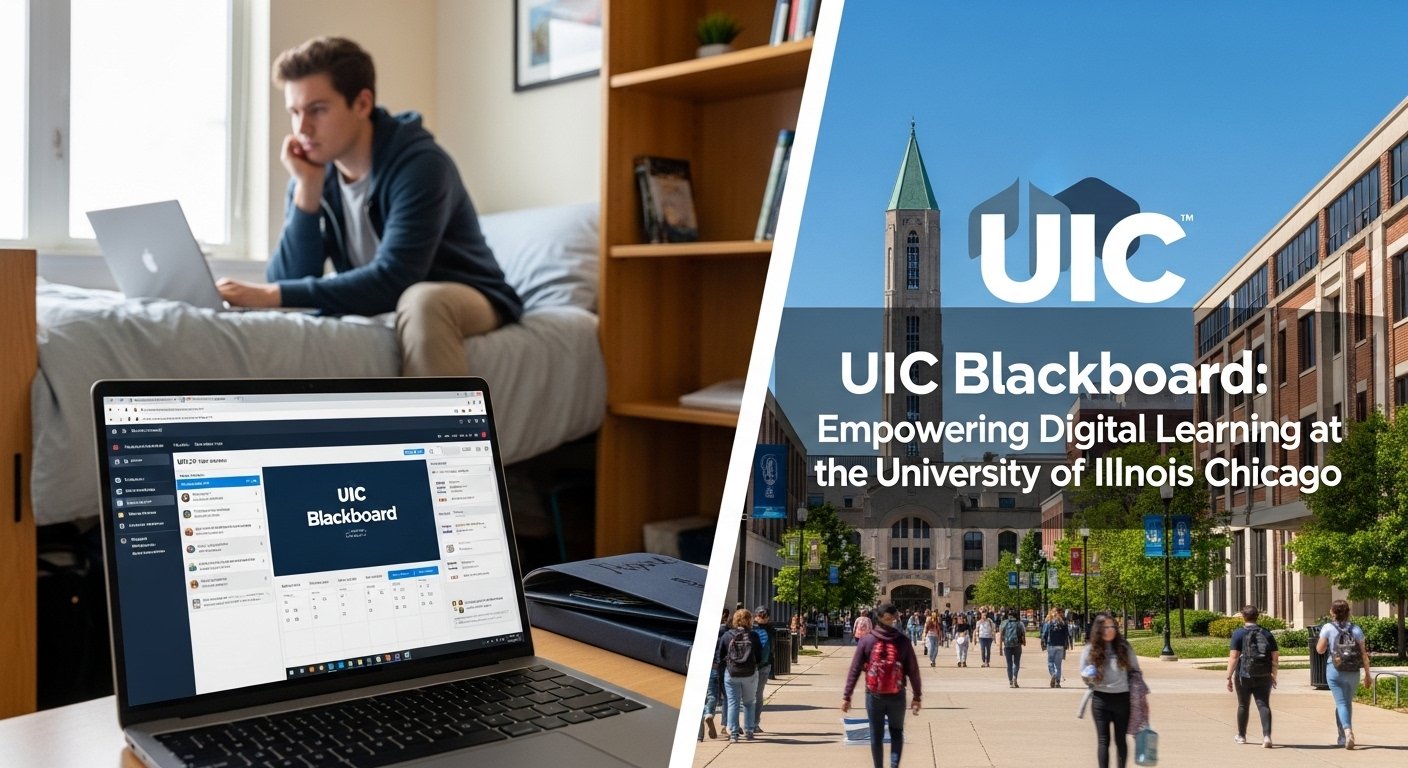
On the first morning of the semester, thousands of students at the University of Illinois Chicago opened their laptops before heading to class. Some were checking assignments, others reviewing lecture slides, and many were joining online discussions with classmates they had never met in person. Nearly all of them were navigating the same digital environment: UIC Blackboard.
In modern universities, learning no longer happens exclusively inside lecture halls. Course materials, discussions, assessments, and collaboration increasingly take place online. Platforms like Blackboard have become the backbone of this transformation, connecting instructors and students through a centralized digital system.
For entrepreneurs, technologists, and founders studying how digital platforms reshape traditional institutions, UIC Blackboard offers an interesting example of how technology can transform education at scale. It demonstrates how universities integrate software platforms into everyday learning, turning physical campuses into hybrid digital ecosystems.
What Is UIC Blackboard?
At its core, UIC Blackboard is the learning management system (LMS) used by the University of Illinois Chicago to organize and deliver course content. The platform serves as a digital hub where instructors upload materials and students access everything related to their courses.
Instead of relying solely on printed syllabi or in-person lectures, the LMS allows instructors to manage course information in one centralized location.
Students typically use the platform to:
- Access lecture notes and course readings
- Submit assignments and projects
- Participate in discussion forums
- Check grades and feedback
- Receive announcements from instructors
By combining these features into one platform, the system simplifies the academic experience for both students and faculty.
In many ways, UIC Blackboard functions as the digital infrastructure behind the university’s educational environment.
The Evolution of Learning Management Systems
To understand the importance of UIC Blackboard, it helps to look at how learning management systems evolved.
Before digital platforms existed, course communication relied on printed handouts, email exchanges, and physical bulletin boards. Managing assignments and grades required significant administrative effort.
As internet technology matured in the early 2000s, universities began adopting LMS platforms to streamline these processes. Blackboard quickly became one of the most widely used systems in higher education.
Over time, the platform expanded beyond basic course management. Today it supports multimedia content, real-time collaboration tools, mobile access, and integration with other educational technologies.
This transformation reflects a broader shift in education—one that emphasizes accessibility, flexibility, and digital engagement.
How UIC Blackboard Supports Modern Learning
The structure of UIC Blackboard allows instructors to design courses in ways that extend beyond traditional lectures.
Professors can upload recorded lectures, interactive learning modules, and discussion prompts that encourage participation outside the classroom.
Students benefit from the ability to revisit materials at their own pace. Recorded lectures can be paused, replayed, or reviewed during exam preparation.
This flexibility is especially valuable for students balancing academic responsibilities with part-time jobs, internships, or research commitments.
In essence, the platform supports a learning model that adapts to the rhythms of modern student life.
Key Features of the Platform
Although students often focus on assignments and grades, UIC Blackboard includes a wide range of tools designed to enhance teaching and learning.
The system functions as a comprehensive academic management platform, offering several important features.
| Feature | Purpose |
|---|---|
| Course Content Management | Organizes lecture materials, readings, and multimedia resources |
| Assignment Submission | Allows students to upload coursework digitally |
| Discussion Boards | Enables class conversations and peer interaction |
| Grade Center | Tracks grades and provides feedback |
| Announcements | Keeps students informed about course updates |
| Online Assessments | Supports quizzes, tests, and automated grading |
These tools allow instructors to manage complex courses efficiently while providing students with clear access to academic resources.
The Student Experience
For students, the daily routine often begins with logging into UIC Blackboard. The dashboard typically displays active courses, upcoming deadlines, and announcements.
This centralized design simplifies academic organization. Instead of navigating multiple websites or email threads, students can find everything related to their coursework in one place.
Another advantage is the transparency of grading systems. Many instructors use the grade center to provide ongoing feedback, allowing students to monitor their progress throughout the semester.
This real-time insight helps students adjust their study strategies and manage their academic performance more effectively.
The Instructor Perspective
While students experience Blackboard as a course portal, instructors view it as a teaching management system.
Professors can design course modules, schedule assignments, and monitor participation through analytics tools. These insights help instructors understand how students interact with course materials.
For example, if many students struggle with a particular topic, instructors can identify the issue through discussion posts or quiz performance.
They can then adjust lectures or provide additional resources to address those challenges.
In this way, the platform enables more responsive and adaptive teaching methods.
Integration with Digital Learning Tools
Modern education relies on a wide range of digital tools, and UIC Blackboard often integrates with many of them.
Video conferencing platforms, plagiarism detection software, and digital textbook systems can all connect with the LMS.
These integrations allow instructors to combine multiple technologies within a single academic environment.
For example, a professor might host a virtual lecture through a video platform while sharing recordings directly through Blackboard.
This interconnected approach creates a seamless learning experience for students.
The Role of Technology in Higher Education
Platforms like UIC Blackboard represent a broader shift in how universities operate. Technology has become essential for delivering education at scale.
Online resources allow universities to serve larger and more diverse student populations. International students, part-time learners, and remote participants can all access the same materials.
For entrepreneurs and tech innovators, this transformation highlights the growing importance of educational technology—often called EdTech.
The EdTech sector continues to expand rapidly as institutions explore new ways to combine digital platforms with traditional teaching.
Benefits for Academic Collaboration
Another important aspect of Blackboard is its ability to support collaboration.
Group assignments, discussion boards, and shared resources encourage students to interact beyond the classroom.
This collaborative environment mirrors the teamwork found in professional workplaces. Students learn how to communicate ideas, exchange feedback, and work together toward shared goals.
These skills are particularly valuable for students preparing for careers in technology, business, and research.
Digital platforms make collaboration possible even when participants are physically distant.
Challenges and Opportunities
While UIC Blackboard offers many advantages, digital learning platforms also present challenges.
Some students may struggle with navigating complex interfaces or managing large volumes of online content. Instructors must also invest time in learning how to design effective digital courses.
However, these challenges often lead to innovation. Universities continue to improve training programs and develop new features that make learning platforms easier to use.
As educational technology evolves, platforms like Blackboard are likely to become even more intuitive and interactive.
The Future of Digital Learning Platforms
Looking ahead, learning management systems will likely incorporate more advanced technologies such as artificial intelligence and personalized learning algorithms.
AI tools may analyze student performance and recommend customized study materials. Virtual reality and immersive simulations could also become part of digital coursework.
For institutions like the University of Illinois Chicago, the continued development of UIC Blackboard or similar platforms will play a central role in shaping the future of education.
Universities that successfully integrate technology into their teaching strategies will be better equipped to serve the next generation of students.
Conclusion: The Digital Backbone of Modern Education
The classroom has changed dramatically over the past two decades. What once relied on chalkboards and printed notes now operates through digital platforms that connect students and instructors across physical and virtual spaces.
UIC Blackboard exemplifies this transformation. By organizing course materials, communication, and assessments in one environment, the platform has become an essential part of academic life at the University of Illinois Chicago.
For entrepreneurs, technologists, and educators, it represents something larger than a software tool. It reflects the ongoing evolution of education itself—an evolution driven by technology, accessibility, and the need for flexible learning environments.
As universities continue to innovate, platforms like Blackboard will remain at the center of how knowledge is shared, explored, and expanded.