
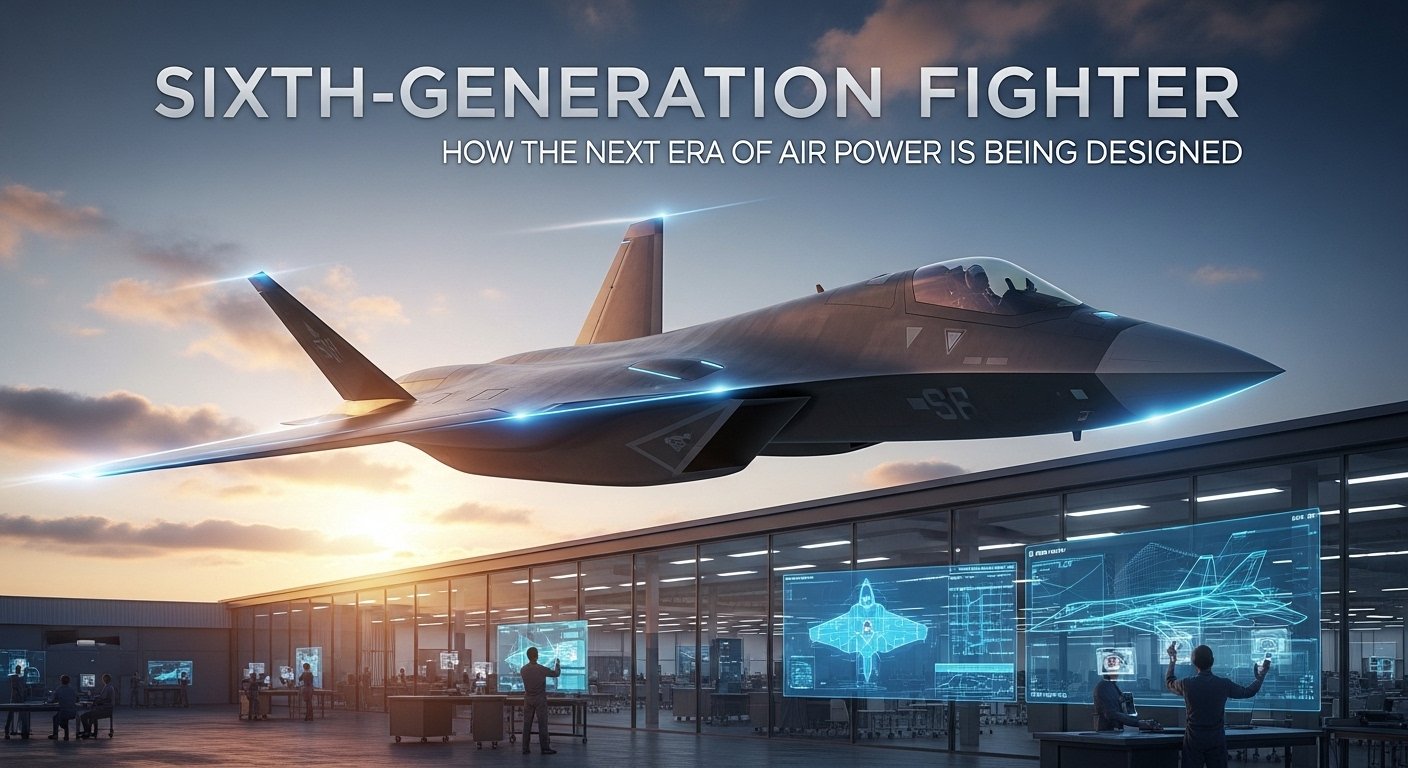
The runway lights flicker against the dark horizon as engineers watch a prototype aircraft roll quietly toward the edge of the tarmac. Unlike traditional fighter jets, its shape looks almost futuristic—sleek surfaces, minimal external features, and a design that seems more like science fiction than conventional aviation. In a control room nearby, analysts track streams of sensor data and simulation results, testing technologies that may define the future of aerial warfare.
This aircraft represents a concept that defense strategists and engineers have been discussing for years: the sixth-generation fighter. While the world is still adapting to the capabilities of fifth-generation aircraft, researchers across several countries are already working to create the next evolutionary step in combat aviation.
For technology readers, entrepreneurs, and innovators, the story behind the sixth-generation fighter goes far beyond military applications. It highlights how artificial intelligence, advanced materials, autonomous systems, and digital networking are converging to create machines that operate as intelligent platforms rather than simple aircraft. The technologies emerging from this effort may influence industries ranging from aerospace engineering to data science.
Understanding the rise of these aircraft reveals not only how air combat is changing but also how technological innovation is accelerating across multiple sectors.
The Evolution of Fighter Aircraft
Modern fighter aviation is often described in “generations,” a framework used to classify technological advancements over time. Each generation reflects significant changes in design philosophy, avionics, and combat capability.
Early jet fighters from the mid-twentieth century represented the first generation. These aircraft replaced propeller-driven planes with jet propulsion, allowing pilots to reach speeds previously unimaginable. However, they relied largely on basic navigation instruments and visual combat tactics.
Second and third generations introduced radar systems, guided missiles, and improved aerodynamics. By the time fourth-generation aircraft arrived, fighters had become highly maneuverable multi-role platforms capable of performing both air-to-air and air-to-ground missions.
The fifth generation brought a major transformation. Aircraft like stealth fighters demonstrated how radar-evading design, sensor fusion, and digital networking could reshape the battlefield.
Now, the concept of the sixth-generation fighter represents the next leap—a step beyond stealth into an era of integrated intelligence and collaborative systems.
What Defines a Sixth-Generation Fighter
The defining characteristic of the sixth-generation fighter is not a single technology but the integration of many advanced capabilities into a unified platform.
Rather than functioning solely as a pilot-controlled aircraft, these machines are designed to operate as command centers within a network of digital and autonomous systems. Engineers often describe this approach as a “system of systems,” meaning the aircraft coordinates multiple assets simultaneously.
A sixth-generation fighter is expected to manage information from satellites, ground systems, drones, and other aircraft in real time. This data integration creates an unprecedented level of situational awareness for the pilot.
In essence, the aircraft becomes both a combat platform and a data hub, capable of analyzing information faster than human operators could alone.
Artificial Intelligence and Decision Support
One of the most transformative elements of the sixth-generation fighter is the use of artificial intelligence to assist pilots.
Modern fighter jets already rely on advanced software to manage radar signals, navigation data, and weapon systems. However, next-generation aircraft are expected to use AI as a strategic partner.
Instead of manually interpreting multiple streams of data, pilots may rely on onboard algorithms that analyze sensor inputs and recommend tactical actions. This assistance could reduce cognitive overload during high-speed combat scenarios.
For example, an AI system might identify potential threats, evaluate possible responses, and present the pilot with prioritized options within seconds.
This collaboration between human and machine allows pilots to focus on strategy while the aircraft handles complex data processing tasks.
The Rise of Autonomous Wingman Systems
Another key feature associated with the sixth-generation fighter is its ability to coordinate with unmanned aircraft known as loyal wingman drones.
These drones act as extensions of the primary aircraft, performing specialized tasks such as reconnaissance, electronic warfare, or defensive interception. Because they are unmanned, they can operate in environments that might be too risky for human pilots.
The fighter aircraft essentially serves as a mission commander, directing the actions of multiple drones during an operation.
This approach dramatically expands operational flexibility. A single pilot could potentially control a small network of supporting aircraft, creating a distributed system capable of adapting to rapidly changing battlefield conditions.
Advanced Stealth and Adaptive Design
Stealth technology has been a defining feature of modern fighter aircraft, but the sixth-generation fighter aims to push this capability even further.
Traditional stealth design focuses on reducing radar reflections through specific shapes and materials. Future aircraft may incorporate adaptive surfaces and new materials that minimize detection across a wider range of sensors, including infrared and electronic surveillance systems.
Engineers are also exploring designs without vertical tails or other traditional aerodynamic features. These configurations may improve stealth characteristics while maintaining aerodynamic stability through advanced flight control systems.
The goal is not merely to avoid radar detection but to operate in environments where multiple sensing technologies are deployed simultaneously.
Technologies Expected in Sixth-Generation Aircraft
The development of next-generation fighters relies on a range of emerging technologies. These innovations are not only relevant to defense but also influence broader technological progress.
| Technology | Purpose in the Aircraft | Potential Impact |
|---|---|---|
| Artificial Intelligence | Processes sensor data and assists decision-making | Faster tactical responses |
| Loyal Wingman Drones | Support missions with autonomous aircraft | Expanded operational reach |
| Advanced Stealth Materials | Reduce visibility across radar and infrared sensors | Greater survivability |
| Directed Energy Weapons | Potential laser-based defensive systems | Precision targeting |
| Networked Data Systems | Connect aircraft to satellites and allied units | Real-time coordination |
Together, these technologies transform the sixth-generation fighter into a highly intelligent and interconnected combat platform.
Global Programs Working on Sixth-Generation Fighters
Several major aerospace programs around the world are currently developing concepts that fall under the sixth-generation category.
In the United States, the Next Generation Air Dominance initiative focuses on creating a family of systems that includes advanced fighters, drones, and digital networking infrastructure.
European nations are collaborating on projects such as the Future Combat Air System and the Global Combat Air Programme. These initiatives aim to build a fully integrated air combat ecosystem.
Other countries are also investing heavily in research and development, recognizing that leadership in aerospace technology carries both strategic and economic advantages.
The global race to develop the sixth-generation fighter reflects the importance of maintaining technological superiority in modern defense systems.
Engineering Challenges and Design Complexity
Creating an aircraft with these capabilities is an extraordinary engineering challenge.
One major issue involves energy generation and management. Advanced radar systems, electronic warfare tools, and potential laser weapons require significant electrical power. Engineers are therefore exploring new propulsion systems capable of producing both thrust and high levels of onboard energy.
Another challenge lies in software integration. A sixth-generation fighter may rely on millions of lines of code to manage its sensors, communications, and autonomous systems. Ensuring reliability and cybersecurity becomes critical.
Finally, cost and development timelines present significant obstacles. Designing an aircraft that will remain relevant for decades requires flexibility and adaptability in both hardware and software architecture.
Why Technology Leaders Are Watching Closely
Although military aviation may seem far removed from the startup world, many innovations developed for advanced fighters eventually influence civilian technology.
Artificial intelligence systems designed for real-time data analysis could inspire applications in logistics, transportation, and automation. Advanced composite materials may improve commercial aerospace manufacturing.
Networking technologies developed for military aircraft could lead to new approaches in secure communications and distributed computing.
The sixth-generation fighter therefore represents not only a defense project but also a catalyst for broader technological advancement.
Historically, innovations such as GPS, satellite communication, and the internet began as defense initiatives before transforming global industries.
The Strategic Future of Air Combat
Air combat in the coming decades will likely look very different from the dogfights depicted in historical aviation films.
Instead of relying solely on speed and maneuverability, future air power will emphasize information dominance. Aircraft will act as intelligent nodes within massive networks of sensors and autonomous systems.
In this environment, the sixth-generation fighter becomes a strategic command platform rather than just a weapon system.
Pilots will coordinate complex operations involving drones, satellites, and other aircraft, using advanced AI tools to interpret information and guide decisions.
The result is a new model of air warfare where intelligence, connectivity, and adaptability matter as much as physical performance.
Conclusion: The Aircraft That Redefines Innovation
As the prototype aircraft disappears into the early morning sky, its significance extends far beyond the runway it left behind.
The sixth-generation fighter represents a new chapter in aviation—one where artificial intelligence, autonomous systems, and advanced engineering converge to create something entirely different from traditional fighter jets.
For entrepreneurs, technology leaders, and innovators, these developments offer a glimpse into the future of complex systems design. The technologies shaping next-generation aircraft may influence industries ranging from robotics to cybersecurity.
Ultimately, the story of the sixth-generation fighter is not just about military power. It is about the relentless pursuit of innovation and the ways advanced technology continues to reshape the boundaries of what machines—and the people who design them—can achieve.