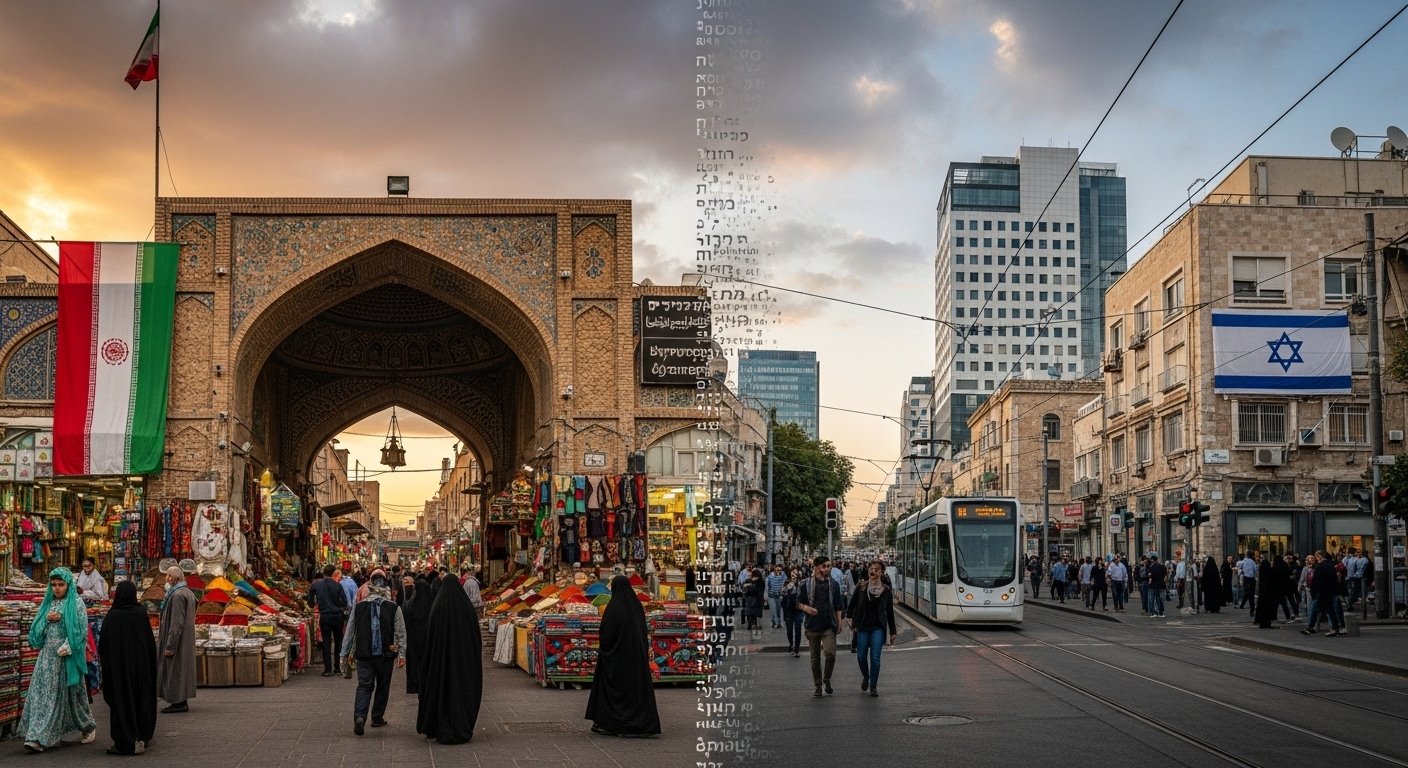
In the early hours of a tense diplomatic week, analysts across the world watched headlines carefully. Governments released statements, markets reacted cautiously, and policy experts debated what might happen next. At the center of the discussion was a geopolitical relationship that has shaped Middle Eastern politics for decades—the ongoing tension between Israel Iran.
The relationship between Israel and Iran is one of the most closely examined rivalries in modern international affairs. Although the two nations do not share a border, their political, military, and ideological competition has influenced regional alliances, security policies, and global diplomacy.
For entrepreneurs, technology leaders, and founders who operate in a globally connected economy, understanding this dynamic is more than a matter of political curiosity. International stability affects energy markets, technology supply chains, global investment, and diplomatic cooperation.
Exploring the history and strategic factors behind the Israel Iran relationship reveals how geopolitical tensions can shape the broader economic and technological landscape.
Early Relations Before the Revolution
The relationship between Israel and Iran was not always defined by hostility.
Before the Iranian Revolution, Iran maintained relatively cooperative ties with Israel. Under the rule of Mohammad Reza Shah Pahlavi, Iran pursued a foreign policy that included quiet partnerships with several Western-aligned countries.
During this period, both nations shared strategic interests. Iran was concerned about regional stability, and Israel sought partnerships in a region where many neighboring states opposed its existence.
Economic exchanges and limited diplomatic cooperation existed, though much of the relationship remained discreet due to regional sensitivities.
However, the revolution in 1979 dramatically changed Iran’s political structure and foreign policy priorities.
The Turning Point of 1979
The overthrow of the Shah and the rise of the Islamic Republic under Ruhollah Khomeini transformed Iran’s position toward Israel.
Following the revolution, the new leadership framed Israel as an adversary and severed diplomatic relations. Iran’s ideological framework emphasized opposition to Israeli policies in the region and support for groups opposing Israeli influence.
From that moment onward, the Israel Iran relationship shifted from cautious cooperation to strategic rivalry.
This transformation also reshaped alliances across the Middle East, influencing how regional powers aligned themselves in political and security matters.
Strategic Competition in the Middle East
Although the two nations are geographically separated, their influence often intersects in neighboring regions.
For example, both countries have strategic interests in countries such as Syria and Lebanon.
Iran has supported various political and military groups in these areas, while Israel views such developments as potential security threats.
This overlapping influence has contributed to a complex pattern of indirect confrontation often described as a “shadow conflict.” Instead of direct large-scale war, competition tends to appear through regional alliances, intelligence operations, and strategic positioning.
The result is a persistent rivalry that shapes the security environment of the broader Middle East.
The Nuclear Question
One of the most debated issues within the Israel Iran dynamic concerns Iran’s nuclear program.
Iran maintains that its nuclear activities are intended for peaceful energy and research purposes. However, Israeli officials have expressed concern that the program could eventually enable nuclear weapons capability.
International negotiations over Iran’s nuclear activities led to the Joint Comprehensive Plan of Action in 2015, an agreement involving several world powers.
The deal placed limits on Iran’s nuclear activities in exchange for economic sanctions relief.
Yet the agreement has faced ongoing political debate and changes in participation among global powers, reflecting the complexity of balancing security concerns with diplomatic engagement.
Technology and Cybersecurity Dimensions
Modern geopolitical rivalries increasingly extend into digital spaces, and the Israel Iran relationship is no exception.
Cybersecurity has become an important element of national defense strategies worldwide. Both countries are recognized for their technological capabilities in cyber operations and digital security research.
These developments highlight how conflicts are evolving beyond traditional military domains.
For technology entrepreneurs and cybersecurity professionals, this dynamic underscores the growing importance of digital resilience and infrastructure protection in national security strategies.
Regional Alliances and Diplomacy
The Israel Iran rivalry also influences the formation of alliances throughout the Middle East.
In recent years, diplomatic initiatives such as the Abraham Accords have reshaped regional relationships by establishing formal ties between Israel and several Arab nations.
These developments have introduced new dynamics into regional politics, creating opportunities for economic cooperation while also shifting strategic calculations.
Iran, meanwhile, maintains its own network of regional partnerships and alliances that reflect its geopolitical priorities.
The interplay of these diplomatic networks contributes to the complexity of Middle Eastern politics.
Economic Implications for Global Markets
Geopolitical tensions between countries such as Israel and Iran can influence global economic trends.
Energy markets, for example, often respond quickly to developments in the Middle East. The region remains a key source of global oil production, and political uncertainty can affect prices and supply chains.
Technology sectors also monitor geopolitical developments closely. Sanctions policies, cybersecurity concerns, and international trade agreements may influence business operations and investment decisions.
For global entrepreneurs, understanding these connections is essential when evaluating market risks and opportunities.
Key Factors in the Israel–Iran Dynamic
A simplified overview highlights the main elements shaping the relationship.
| Factor | Description | Impact |
|---|---|---|
| Historical Shift | Relations changed after the 1979 revolution | Ended previous cooperation |
| Regional Influence | Competition in neighboring countries | Indirect strategic conflict |
| Nuclear Debate | Disagreements over nuclear development | Global diplomatic negotiations |
| Cybersecurity | Digital and cyber capabilities | New forms of competition |
| Alliances | Regional partnerships and diplomacy | Changing Middle East power balance |
These factors illustrate why the relationship remains a major focus of international analysis.
The Role of Global Diplomacy
International organizations and global powers frequently attempt to reduce tensions in the region.
Diplomatic negotiations, sanctions policies, and multilateral agreements all play roles in shaping the environment in which the Israel Iran rivalry unfolds.
Countries across Europe, Asia, and North America often participate in discussions aimed at maintaining stability.
While progress can be slow, diplomacy remains a central mechanism for managing complex geopolitical relationships.
Lessons for Business and Technology Leaders
For entrepreneurs and technology founders, geopolitical awareness has become increasingly important.
Global businesses operate within interconnected systems where political developments can influence markets, regulations, and international partnerships.
The Israel Iran dynamic demonstrates how regional tensions can affect everything from energy prices to cybersecurity policy.
Companies that monitor geopolitical trends are better positioned to anticipate risks and adapt to changing global conditions.
Strategic awareness is now as essential as technological innovation.
Conclusion: A Relationship Shaping Regional and Global Dynamics
The relationship between Israel and Iran remains one of the most influential geopolitical dynamics in the modern Middle East.
Rooted in historical transformations, ideological differences, and strategic competition, the rivalry continues to shape diplomacy, security policies, and economic decisions across the region.
Yet the future of the Israel Iran relationship will depend on evolving political leadership, international negotiations, and broader regional developments.
For observers around the world—from policymakers to entrepreneurs—the story serves as a reminder that geopolitics and global business are deeply interconnected.
Understanding these relationships is not simply about analyzing conflict. It is about recognizing how international dynamics influence the world’s political, economic, and technological systems.