
On a quiet afternoon in a co-working space, a startup founder reviews feedback from early users of a new product. The technology works well, the design is clean, and the pricing is competitive. Yet something feels incomplete. Customers are asking deeper questions: How does the product fit into their lives? Does it solve a meaningful problem? Does it align with their values?
Moments like this reveal an idea gaining attention across modern business thinking—whaleness.
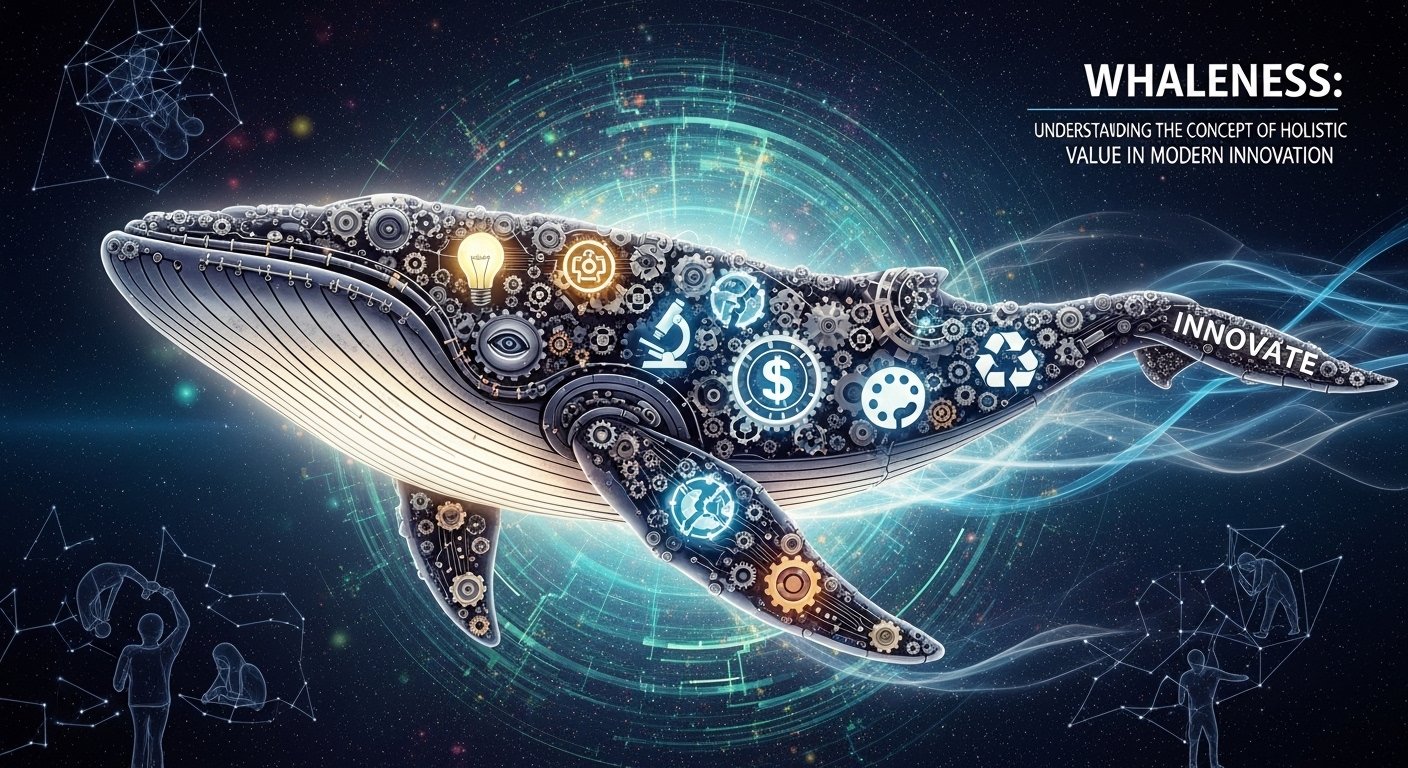
The concept of whaleness refers to the pursuit of completeness or holistic value in systems, products, and organizations. Instead of focusing narrowly on isolated metrics such as profit, efficiency, or growth, whaleness emphasizes the integration of purpose, sustainability, user experience, and long-term impact.
For entrepreneurs, technology leaders, and founders navigating today’s complex markets, understanding whaleness can provide a powerful framework for building organizations that are not only successful but also meaningful and resilient.
As the digital economy evolves, businesses are increasingly recognizing that true innovation often emerges when technology, human needs, and ethical considerations align.
The Origins of the Whaleness Idea
Although the term whaleness may sound modern, the underlying idea draws from older philosophical traditions.
Across cultures and disciplines, thinkers have long explored the importance of viewing systems as interconnected wholes rather than isolated components. In science, systems theory emphasizes how different parts of a structure interact to create emergent behavior. In philosophy, holistic thinking encourages understanding the broader context of human actions.
In business, these perspectives began influencing organizational strategy in the late twentieth century. Companies started realizing that optimizing a single metric—such as short-term profit—could undermine long-term stability.
Whaleness extends this insight further.
It encourages leaders to examine how their decisions affect not only financial outcomes but also employees, customers, communities, and the environment.
This broader perspective reflects the increasingly interconnected nature of modern society.
Whaleness in the Context of Entrepreneurship
Entrepreneurship traditionally celebrates speed, disruption, and rapid growth. Startups often operate under intense pressure to scale quickly and capture market share.
However, the modern startup ecosystem is evolving.
Founders are beginning to recognize that long-term success depends on more than rapid expansion. Sustainable growth requires strong company culture, ethical leadership, and products that genuinely improve users’ lives.
This is where whaleness becomes relevant.
A whaleness-driven approach encourages entrepreneurs to design businesses that integrate multiple forms of value. Financial performance remains important, but it is balanced with user satisfaction, employee wellbeing, and societal impact.
This mindset does not slow innovation. Instead, it strengthens it by ensuring that progress benefits all stakeholders.
Technology and the Search for Whaleness
In the digital age, technology companies wield enormous influence over daily life.
Social platforms shape communication, software tools guide decision-making, and artificial intelligence systems increasingly influence how information is processed and delivered.
Because of this influence, many technologists have begun exploring how innovation can reflect broader values.
The principle of whaleness suggests that technology should serve human needs in balanced and thoughtful ways.
For example, a digital platform designed with whaleness in mind would consider not only engagement metrics but also user wellbeing and ethical data practices.
Similarly, a product development team might evaluate environmental sustainability alongside engineering efficiency.
This broader view helps ensure that technological progress contributes positively to society.
The Human Dimension of Whaleness
One of the most important aspects of whaleness is its focus on human experience.
Businesses often analyze performance through numbers—revenue growth, conversion rates, or productivity metrics. While these measurements provide useful insights, they do not fully capture how people interact with products and organizations.
Whaleness encourages leaders to pay attention to qualitative factors as well.
How do customers feel when using a product? Do employees find meaning in their work? Does the company contribute positively to the communities it touches?
These questions may seem abstract, but they play a crucial role in building trust and long-term loyalty.
Companies that embrace whaleness often discover that strong relationships with customers and employees become powerful drivers of innovation.
The Strategic Advantages of Whaleness
For founders and executives, adopting a whaleness perspective can produce several strategic benefits.
First, it encourages long-term thinking. Businesses that prioritize holistic value are more likely to invest in sustainable practices and resilient systems.
Second, it strengthens brand reputation. Consumers increasingly support companies that demonstrate social responsibility and ethical behavior.
Third, whaleness improves decision-making. When leaders consider multiple dimensions of impact, they are better equipped to anticipate risks and opportunities.
Finally, organizations that pursue whaleness often foster stronger internal cultures. Employees who believe in a company’s mission tend to be more motivated, creative, and committed.
Together, these advantages create a foundation for durable success.
Whaleness Compared With Traditional Business Metrics
Understanding how whaleness differs from conventional performance frameworks can clarify its role in modern strategy.
| Business Perspective | Traditional Approach | Whaleness-Oriented Approach |
|---|---|---|
| Primary Focus | Profit and growth | Balanced value creation |
| Decision Criteria | Financial metrics | Financial, social, and environmental impact |
| Leadership Style | Efficiency-driven | Purpose-driven and strategic |
| Innovation Goals | Market disruption | Sustainable improvement |
| Stakeholder View | Shareholders first | Multiple stakeholders considered |
This comparison shows how whaleness expands the scope of strategic thinking rather than replacing traditional business goals.
Whaleness in Product Development
The principle of whaleness also influences how products are designed and delivered.
In traditional development cycles, teams often focus on technical functionality and market demand. While these factors remain essential, whaleness encourages designers to examine broader implications.
For instance, product teams may consider accessibility features that allow people with disabilities to use digital platforms effectively.
They might also evaluate environmental impacts related to manufacturing processes or data center energy consumption.
By integrating these considerations into product development, companies create solutions that address real-world needs more comprehensively.
This holistic approach often leads to innovations that resonate deeply with users.
Challenges in Achieving Whaleness
Despite its advantages, implementing whaleness within an organization can be challenging.
Many businesses operate under intense competitive pressure, making it difficult to prioritize long-term goals over short-term gains.
Measuring holistic value also presents difficulties. Financial metrics are straightforward, but social and environmental impacts can be harder to quantify.
Cultural change is another challenge. Teams accustomed to traditional performance frameworks may initially resist broader strategic perspectives.
Overcoming these obstacles requires clear leadership, transparent communication, and a willingness to experiment with new management practices.
Organizations that successfully navigate this transition often discover that whaleness enhances both innovation and resilience.
The Future of Whaleness in the Digital Economy
As technology continues shaping the global economy, the relevance of whaleness is likely to increase.
Consumers are becoming more conscious of the ethical and environmental implications of the products they use. Governments are introducing regulations that encourage responsible innovation.
Meanwhile, employees—especially younger generations—seek workplaces that align with their personal values.
These trends suggest that holistic thinking will become a defining characteristic of successful organizations.
Companies that integrate whaleness into their strategies today may gain a significant advantage as markets evolve toward more responsible and sustainable models of growth.
Conclusion: Building a More Complete Vision of Success
The concept of whaleness challenges traditional assumptions about what success in business truly means.
Rather than focusing exclusively on speed, scale, or profit, whaleness encourages leaders to consider the broader impact of their decisions. It invites entrepreneurs to build companies that create meaningful value for customers, employees, communities, and the environment.
For founders navigating the complexities of the digital age, this perspective offers both a strategic framework and a moral compass.
In a world where technology shapes nearly every aspect of life, the pursuit of whaleness may help ensure that innovation moves forward with purpose, balance, and responsibility.
Ultimately, businesses that embrace this holistic vision are not only more sustainable—they are also more capable of shaping a future that benefits everyone.