
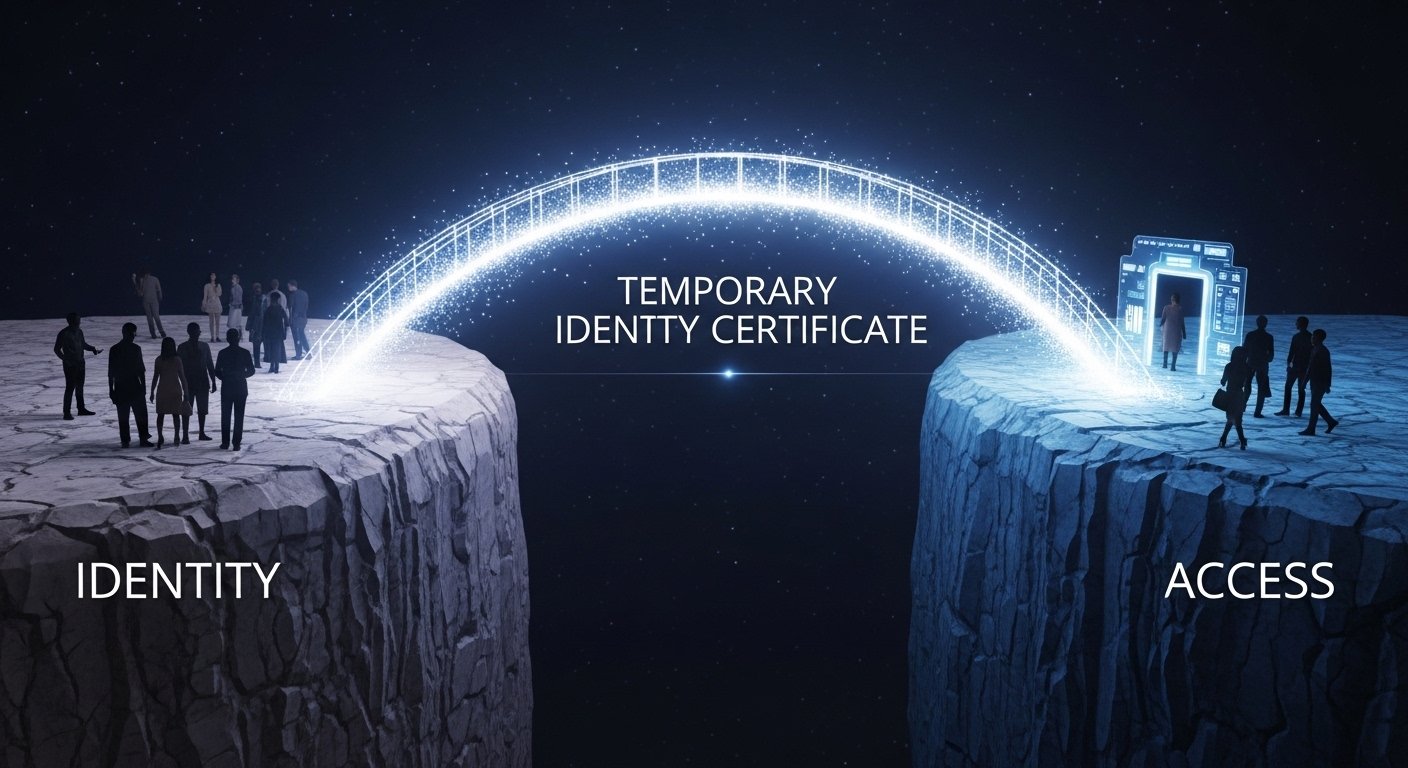
It often happens at the most inconvenient moment. A passport is lost during travel, a national ID is delayed in processing, or official documents are caught in bureaucratic limbo. In that gap—where identity exists but cannot be proven—people rely on something less permanent but equally critical: a temporary identity certificate.
For many, this document is more than paperwork. It is access to movement, services, and opportunity. Whether crossing borders, opening a bank account, or verifying identity for employment, the ability to prove who you are remains fundamental in modern society.
For entrepreneurs, tech readers, and founders, this concept extends beyond administration. It touches on identity systems, digital transformation, and the evolving relationship between individuals and institutions.
What Is a Temporary Identity Certificate?
A temporary identity certificate is an official document issued by a government authority to verify a person’s identity for a limited period. It is typically provided when permanent identification—such as a passport or national ID card—is unavailable, under renewal, or being replaced.
Unlike permanent IDs, these certificates are time-bound and often restricted in scope.
They serve a specific purpose: to ensure continuity.
This continuity allows individuals to function within systems that require verified identity, even when their primary documentation is not accessible.
Why Temporary Identity Certificates Exist
The need for temporary identity certificates arises from a simple reality: identity systems are not always instantaneous.
Processing delays, document loss, and administrative procedures can create gaps.
Without a temporary solution, these gaps could disrupt essential activities.
Governments and institutions recognize this challenge.
By issuing temporary certificates, they provide a bridge between the absence of documentation and the restoration of permanent identity.
This approach reflects a broader principle: systems must be resilient enough to handle exceptions.
Common Situations Where They Are Used
Temporary identity certificates are issued in a variety of scenarios.
A traveler who loses their passport abroad may receive a temporary document from their embassy.
In such cases, organizations like the U.S. Department of State or similar national authorities step in to assist their citizens.
Similarly, individuals awaiting the renewal of a national ID may be issued a temporary certificate to maintain access to services.
Refugees and displaced persons may also rely on temporary identity documents issued by international organizations such as the United Nations.
In each case, the goal is the same: to ensure that identity—and the rights associated with it—remains intact.
The Role of Temporary Identity in Modern Systems
Identity is the foundation of many modern systems.
Banking, healthcare, travel, and employment all rely on accurate identification.
A temporary identity certificate ensures that these systems continue to function, even when standard documentation is unavailable.
For entrepreneurs, this highlights the importance of redundancy.
Systems must account for failure points.
They must provide alternatives that maintain continuity without compromising security.
Comparing Temporary and Permanent Identity Documents
To better understand their role, consider the following comparison:
| Feature | Temporary Identity Certificate | Permanent ID Document |
|---|---|---|
| Validity Period | Short-term | Long-term |
| Purpose | Interim verification | Full identification |
| Security Features | Basic to moderate | Advanced |
| Acceptance Scope | Limited | Widely accepted |
| Issuing Process | Faster | More comprehensive |
This table illustrates how temporary certificates complement, rather than replace, permanent IDs.
Security Considerations
One of the key challenges associated with temporary identity certificates is security.
Because they are issued quickly and often under urgent circumstances, they may have fewer security features than permanent documents.
This creates potential risks.
Fraud, misuse, and identity theft are concerns that authorities must address.
To mitigate these risks, issuing agencies implement verification processes, even for temporary documents.
For tech-focused readers, this is an area where innovation plays a crucial role.
Biometric verification, digital signatures, and blockchain-based identity systems are emerging solutions.
The Shift Toward Digital Identity
The concept of a temporary identity certificate is evolving.
Digital identity systems are transforming how individuals prove who they are.
Instead of physical documents, digital credentials can be issued instantly and verified securely.
Governments and organizations are exploring these solutions.
For example, digital identity initiatives supported by entities like the World Bank aim to provide secure and accessible identification to millions of people worldwide.
In this context, temporary identity certificates may become digital, reducing delays and improving security.
Implications for Entrepreneurs and Startups
For founders and innovators, temporary identity systems present both challenges and opportunities.
On one hand, they highlight inefficiencies in traditional processes.
On the other, they reveal areas for innovation.
Startups can explore solutions in digital identity verification, secure document issuance, and cross-border authentication.
These technologies have applications in fintech, healthcare, and e-commerce.
Understanding how temporary identity certificates function can provide valuable insights into building more resilient systems.
The Human Impact
Beyond technology and policy, temporary identity certificates have a human dimension.
They provide reassurance during uncertain situations.
They enable people to continue their lives without interruption.
For someone who has lost their documents, a temporary certificate can mean the difference between being stranded and finding a way home.
This human impact is often overlooked but deeply significant.
Challenges and Limitations
Despite their importance, temporary identity certificates are not without limitations.
Their restricted validity can create complications.
Not all institutions accept them.
Verification processes may vary across regions.
These challenges highlight the need for standardization and improved systems.
As global mobility increases, the demand for universally recognized identity solutions will continue to grow.
The Future of Identity Verification
The future of identity lies in integration.
Physical documents, digital credentials, and biometric systems will work together to create seamless verification processes.
Temporary identity certificates will likely become part of this integrated ecosystem.
They will evolve from paper-based documents to secure digital tokens.
This transformation will enhance both accessibility and security.
Conclusion: Bridging Gaps in a Connected World
The temporary identity certificate is more than an administrative tool.
It is a bridge—connecting individuals to systems, opportunities, and rights during moments of disruption.
For entrepreneurs and tech leaders, it offers a powerful lesson.
Systems must be designed not just for ideal conditions, but for real-world complexity.
They must account for uncertainty and provide solutions that maintain continuity.
As identity systems evolve, the principles behind temporary certificates will remain relevant.
Because in a connected world, the ability to prove who you are—at any moment—remains essential.