Imagine biting into a vibrant, sweet slice of yellow dragon fruit. Its unique appearance and luscious taste make it one of the most sought-after exotic fruits in the world. But what if you could grow this delightful treat right in your own backyard? Yellow dragon fruit, also known as pitaya, offers not just a feast for your taste buds but an enriching gardening experience too. Whether you’re looking to impress friends with homegrown produce or simply want to expand your gardening horizons, cultivating yellow dragon fruit is both rewarding and achievable. Let’s dive into how you can turn your garden into a tropical paradise!
Benefits of Growing Your Own Fruit at Home
Growing your own fruit at home is a delightful endeavor. It brings the satisfaction of nurturing something from seed to harvest. Each step in this journey offers a sense of accomplishment.
Homegrown fruits, like yellow dragon fruit, are fresher and tastier than store-bought varieties. The flavor explosion you experience after taking that first bite is unmatched.
Another significant advantage is knowing exactly what goes into your plants. You can choose organic practices, free from harmful chemicals or pesticides.
Plus, gardening can be therapeutic. The act of tending to your plants reduces stress while providing physical activity. Connecting with nature has never been more accessible.
Growing your own fruit saves money over time. Instead of buying expensive exotic fruits at the market, you’ll have a steady supply right in your backyard or patio garden. It’s rewarding on many levels!
Choosing the Right Climate for Yellow Dragon Fruit
Yellow dragon fruit thrives in warm, tropical climates. Ideal temperatures range between 65°F and 100°F (18°C to 38°C). It’s crucial to avoid frost, as cold snaps can damage your plant.
These cacti prefer full sun exposure for at least six hours a day. A sunny spot helps them grow strong and produce delicious fruit. If you live in a cooler area, consider growing them in pots that can be moved indoors during chilly months.
Humidity is another factor to consider. Yellow dragon fruit likes moderate humidity levels around 50% to 70%. If the air is too dry, misting the plants occasionally can help maintain a suitable environment.
Check your local climate conditions before planting. Understanding seasonal changes will guide you on when to plant or protect your yellow dragon fruit from extreme weather events.
Preparing the Soil and Planting the Seeds
Preparing the soil for yellow dragon fruit is essential for healthy growth. Start by selecting well-draining soil, as excess moisture can lead to root rot. A sandy loam mix works wonders because it retains some moisture while allowing airflow.
Before planting, enrich the soil with organic compost. This boosts nutrients and provides a fertile environment for your seeds or cuttings. Aim for a pH level between 6 and 7; you can use simple testing kits available at garden centers.
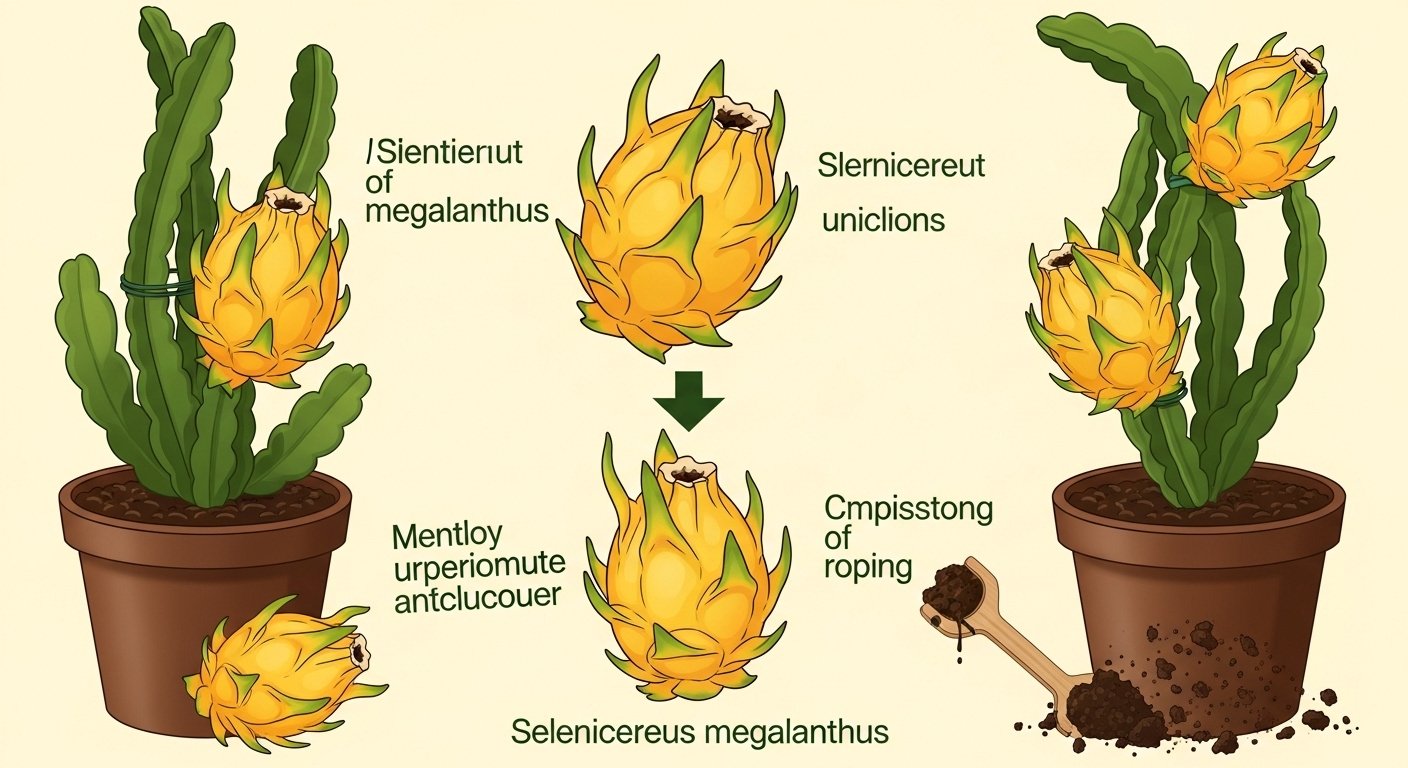
When it’s time to plant, create small holes about an inch deep in the prepared soil. If using seeds, space them around two feet apart to give each plant room to thrive. For cuttings, ensure you place them upright in the holes before covering lightly with soil.
Water gently after planting but avoid soaking the area completely. This initial watering helps settle the soil around your new plants without drowning them.
Caring for Your Yellow Dragon Fruit Plant
Caring for your yellow dragon fruit plant is essential to ensure a bountiful harvest. These plants thrive in well-draining soil and require plenty of sunlight. Aim for at least 6 hours of direct sun each day.
Watering should be done carefully. Allow the top inch of soil to dry out before watering again, as overwatering can lead to root rot. It’s best to water deeply but infrequently.
Fertilization plays a vital role too. Use a balanced fertilizer every few months during the growing season to encourage healthy growth and blooming.
Pruning is also recommended. Trim back weak or dying stems regularly to promote airflow and prevent disease.
Keep an eye out for pests like aphids or mealybugs. If you spot any, treat them promptly with insecticidal soap or neem oil for effective control without harming your plant’s health.
Harvesting and Enjoying Your Homegrown Yellow Dragon Fruit
The excitement of harvesting your yellow dragon fruit is hard to match. These vibrant fruits typically ripen about 30 days after flowering. Look for a bright yellow skin and slightly soft texture to ensure they’re ready.
Gently twist the fruit off the plant, being careful not to damage any remaining stems or buds. A sharp knife can help if you encounter any resistance.
Once harvested, wash the fruit thoroughly under cool water. Cut it open to reveal its stunning white flesh dotted with tiny black seeds—a feast for both the eyes and palate.
Enjoy your yellow dragon fruit fresh as a snack, add it to smoothies, or use it in salads for a tropical flair. The subtly sweet taste will transport you straight to paradise while boosting your health with vitamins and antioxidants. Each bite is a reward for your gardening efforts!
Common Problems and How to Troubleshoot Them
Growing yellow dragon fruit can be rewarding, but you might face some challenges. One common issue is poor pollination. If your blooms aren’t setting fruit, consider hand-pollinating them with a small brush or cotton swab.
Pests like aphids and mealybugs can also invade your plants. Regularly inspect for these unwanted guests and treat them with insecticidal soap or neem oil for effective control.
Another problem could be root rot due to overwatering. Ensure your soil has good drainage by mixing in sand or perlite. Adjust your watering schedule based on the weather conditions—less during cooler months.
Look out for sunburned skin on the fruits; this happens if they’re exposed to intense sunlight without adequate protection. Providing partial shade during peak hours can help prevent this damage and promote healthy growth of your yellow dragon fruit plant.
Conclusion: The Joy of Growing Your Own Yellow Dragon Fruit
Growing your own yellow dragon fruit can be a rewarding experience. There’s something special about nurturing a plant from seed to harvest. The vibrant colors and unique shapes of the fruit add an exotic flair to any garden or patio.
By cultivating this tropical beauty, you not only enjoy fresh, nutritious produce but also gain knowledge and skills in gardening. Watching your yellow dragon fruit thrive brings immense satisfaction and can even spark joy in sharing with family and friends.
Whether you’re sipping on smoothies made with your homegrown fruit or showcasing them at gatherings, there’s no denying the pride that comes from growing it yourself. Plus, you get to marvel at the stunning blooms that precede the fruits—a true testament to nature’s wonders.
The journey of growing yellow dragon fruit encourages patience, dedication, and creativity—qualities that enrich our lives beyond just gardening. So grab some seeds today; embark on this flavorful adventure right in your backyard!