
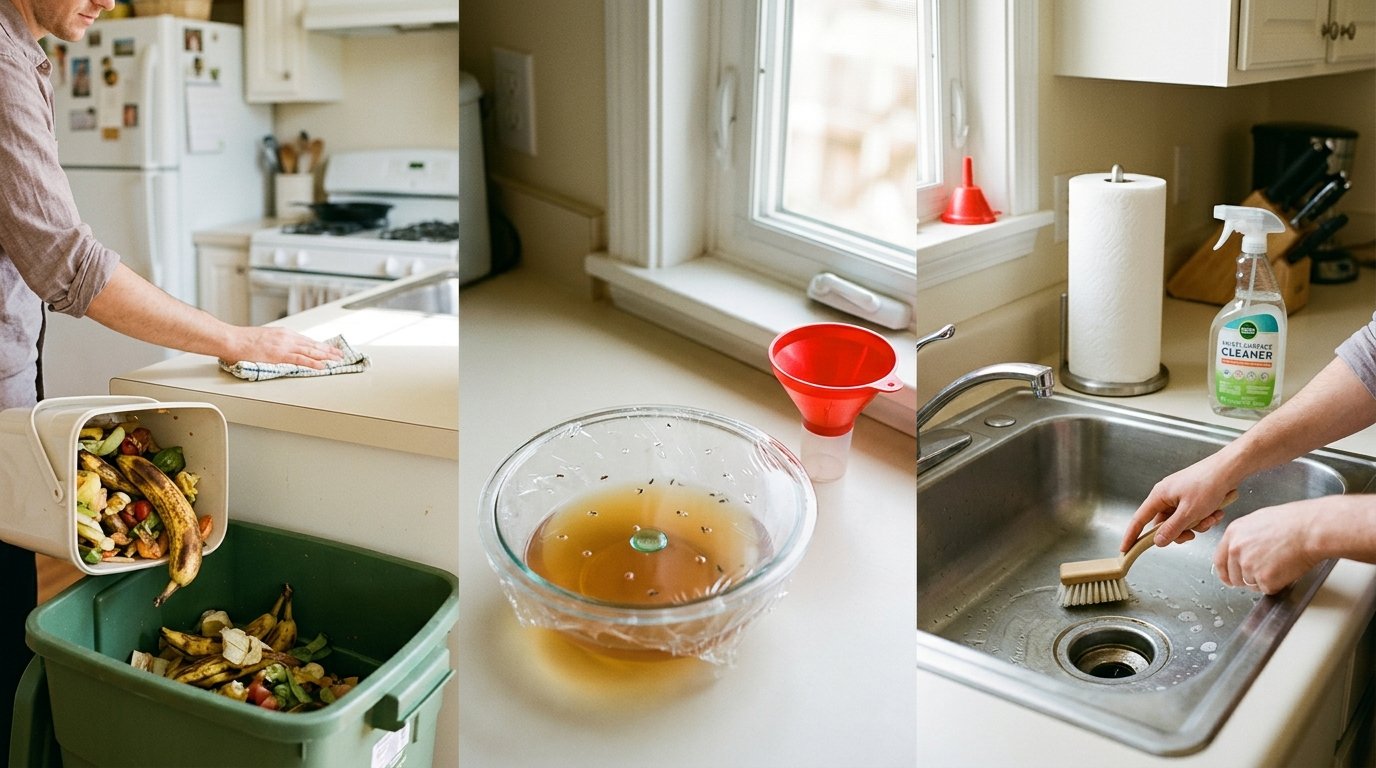
It usually starts with one insect hovering near a bowl of bananas or drifting lazily around a kitchen sink. Easy to ignore at first, fruit flies seem harmless—until suddenly they are everywhere. They circle coffee cups, gather near drains, appear around trash bins, and multiply faster than most people expect. What begins as a minor annoyance quickly becomes a daily frustration that makes even clean homes feel unhygienic.
Learning how to get rid of fruit flies is not simply about killing visible insects. The real challenge lies in understanding why they appear so quickly, how rapidly they reproduce, and what environmental conditions allow them to thrive indoors.
In modern homes, especially in urban apartments and fast-paced professional households, fruit flies flourish because contemporary living unintentionally creates ideal breeding conditions. Kitchens filled with fresh produce, organic waste bins, delivery packaging, coffee residue, and humid drains offer constant food sources for these insects.
The good news is that fruit fly infestations are highly manageable once the underlying causes are identified. Effective control depends less on aggressive chemical sprays and more on environmental strategy, sanitation, and disrupting the insects’ reproductive cycle.
For homeowners, renters, entrepreneurs working remotely, and anyone spending more time indoors, understanding fruit fly behavior has become surprisingly relevant in maintaining healthier living environments.
Why Fruit Flies Appear So Quickly
One reason fruit flies feel impossible to control is their astonishing reproductive speed.
A single female fruit fly can lay hundreds of eggs within days, often on fermenting organic matter invisible to the human eye. Overripe fruit, sugary residue, damp mops, drain buildup, and forgotten food scraps all create ideal breeding environments.
What makes infestations frustrating is that people usually notice adult flies only after eggs have already hatched and populations have expanded.
Modern indoor environments unintentionally support this process well. Heated homes, steady food access, and year-round moisture allow fruit flies to reproduce continuously without seasonal interruption.
The insects are especially attracted to fermentation. Any sugary material beginning to decompose becomes highly attractive because yeast and bacteria create odors fruit flies can detect from surprising distances.
Understanding this biological pattern is essential because visible insects represent only part of the problem. The true source often remains hidden nearby.
The Difference Between Fruit Flies and Similar Pests
Many people confuse fruit flies with fungus gnats or drain flies because all three appear as small flying household insects.
However, each species behaves differently and requires slightly different treatment approaches.
Fruit flies are typically tan or light brown with rounded bodies and noticeable red eyes. They gather around produce, alcohol, sugary liquids, and kitchen waste.
Drain flies appear fuzzier and moth-like, usually clustering near sinks and plumbing systems.
Fungus gnats are darker, thinner, and commonly associated with overwatered indoor plants.
Correct identification matters because misdiagnosing the source often leads to ineffective treatments.
For example, spraying kitchens will not solve a fungus gnat infestation rooted in damp potting soil. Likewise, treating houseplants will not eliminate fruit flies breeding beneath a garbage disposal.
Successful pest control begins with locating the reproduction site rather than reacting only to visible insects.
Why Kitchens Become Ideal Breeding Grounds
Modern kitchens contain nearly everything fruit flies need:
moisture,
warmth,
organic material,
and hidden fermentation sources.
Countertop fruit bowls are common culprits, especially during warmer weather when produce ripens rapidly indoors. However, many infestations originate from less obvious locations.
Recycling bins frequently contain sugary beverage residue.
Kitchen drains accumulate organic buildup.
Sponges retain moisture and bacteria.
Trash cans trap microscopic food particles.
Even unopened produce brought home from grocery stores can carry fruit fly eggs or larvae.
This explains why infestations sometimes appear suddenly despite regular cleaning routines.
The issue is not necessarily household hygiene alone. It is environmental opportunity.
Fruit flies excel at exploiting tiny overlooked food sources that humans rarely notice.
How to Eliminate the Source Effectively
The most effective strategy for how to get rid of fruit flies focuses on removing breeding conditions entirely.
Temporary traps may reduce visible populations, but infestations usually continue unless reproduction sites disappear.
Fresh produce should be inspected regularly and refrigerated whenever possible. Overripe fruit should never remain exposed indoors for extended periods.
Kitchen drains deserve particular attention because organic residue inside pipes creates hidden breeding environments. Flushing drains with boiling water followed by baking soda and vinegar helps break down buildup naturally.
Trash management also matters significantly. Organic waste bins should be emptied frequently and cleaned thoroughly rather than simply lined with fresh bags.
Moisture reduction is equally important. Fruit flies prefer humid environments where organic material decomposes more quickly.
Small environmental adjustments often produce larger results than chemical treatments alone.
Why DIY Traps Work Surprisingly Well
One reason homemade fruit fly traps remain popular is that they exploit the insects’ biological attraction to fermentation.
Apple cider vinegar traps work effectively because vinegar mimics the scent profile of decomposing fruit. Adding a small amount of dish soap breaks surface tension, preventing flies from escaping once they land.
Wine remnants, beer, or sweet fruit juice can function similarly.
The effectiveness of these traps highlights an important principle in pest management: understanding insect behavior is often more useful than relying purely on toxicity.
Fruit flies are highly predictable creatures. Their sensory systems guide them consistently toward moisture, sugar, and fermentation.
This predictability makes behavioral disruption highly effective.
| Fruit Fly Attraction Source | Why It Attracts Flies | Best Prevention Method |
|---|---|---|
| Overripe fruit | Fermentation and sugar release | Refrigerate produce |
| Kitchen drains | Organic buildup and moisture | Regular drain cleaning |
| Trash bins | Food residue and humidity | Frequent disposal and sanitizing |
| Recycling containers | Sugary liquid remnants | Rinse containers immediately |
| Damp cleaning cloths | Bacteria and organic matter | Dry or replace regularly |
The key is consistency rather than temporary reaction.
The Role of Temperature and Seasonal Changes
Fruit fly activity often increases during warmer months because heat accelerates fermentation and insect reproduction.
However, modern climate-controlled homes allow infestations to persist year-round.
Temperature affects both egg development and adult lifespan. Warm indoor environments can shorten reproductive cycles dramatically, allowing populations to grow within days rather than weeks.
This is why fruit fly problems often feel sudden and overwhelming.
One neglected food source may support multiple generations before people recognize the infestation fully.
Seasonal produce habits also contribute. Summer fruits with higher sugar content naturally attract more insects when left exposed.
Understanding these environmental patterns helps homeowners anticipate outbreaks before they intensify.
Why Chemical Sprays Rarely Solve the Problem
Many people initially respond to fruit flies with aerosol insect sprays. While sprays may kill visible adults temporarily, they rarely eliminate infestations completely.
The reason is simple:
the breeding source remains active.
Chemical sprays also fail to address eggs and larvae hidden inside drains, trash residue, or decomposing produce.
In some cases, excessive spraying can worsen indoor air quality without producing meaningful long-term results.
Modern pest management increasingly emphasizes environmental control rather than blanket chemical use.
This mirrors broader trends in sustainability and household wellness where prevention outperforms reactive intervention.
The most successful fruit fly solutions involve disrupting the insects’ lifecycle entirely.
The Psychology of Household Pests
Fruit flies create disproportionate frustration partly because they invade highly personal spaces.
Kitchens symbolize cleanliness, nourishment, and comfort. When insects appear repeatedly around food preparation areas, people often feel irritation beyond the practical inconvenience itself.
Small pests also trigger psychological stress because they seem difficult to control completely. Their rapid movement and persistent visibility create the impression of constant contamination even when actual health risks remain relatively low.
This emotional response explains why fruit fly infestations often feel more disruptive than their size would suggest.
In increasingly indoor-oriented lifestyles, environmental comfort matters deeply.
People want homes that feel calm, functional, and hygienic. Persistent insects disrupt that psychological atmosphere quickly.
Prevention as a Long-Term Strategy
The best approach to how to get rid of fruit flies ultimately focuses on prevention rather than repeated elimination cycles.
Once breeding sources disappear consistently, infestations decline naturally because fruit flies have extremely short lifespans.
Long-term prevention habits include:
regular produce inspection,
sealed food storage,
routine drain maintenance,
dry cleaning materials,
and careful waste management.
Importantly, prevention does not require perfection.
Fruit flies are common partly because modern kitchens naturally generate small amounts of organic waste and moisture. The goal is environmental balance rather than sterile overcorrection.
Small consistent habits outperform dramatic temporary cleaning efforts.
Why Tiny Environmental Changes Matter
One of the most interesting aspects of fruit fly control is how minor environmental adjustments produce major effects.
Moving fruit into refrigerators.
Drying sink areas overnight.
Cleaning beneath recycling bins.
Rinsing beverage containers immediately.
These small actions interrupt biological conditions fruit flies depend on for survival.
This principle reflects a larger truth visible in many systems beyond pest control: environments shape behavior more effectively than reactive interventions alone.
Whether in business, health, technology, or home maintenance, sustainable results usually emerge from structural adjustments rather than isolated fixes.
Conclusion: The Real Secret to Getting Rid of Fruit Flies
Learning how to get rid of fruit flies is ultimately less about extermination and more about environmental awareness.
Fruit flies thrive wherever moisture, fermentation, and overlooked organic material create opportunities for reproduction. Eliminating them successfully means understanding those patterns and removing the conditions that support them.
In many ways, these tiny insects reveal how interconnected modern living spaces have become with biological systems people rarely notice. Kitchens are not static environments. They are ecosystems influenced by temperature, waste, airflow, and daily habits.
The good news is that fruit flies are highly manageable once those systems become visible.
Through consistent cleaning, moisture control, smart food storage, and targeted trapping, even persistent infestations can disappear quickly.
And perhaps that is the deeper lesson hidden inside such a common household problem: small environmental changes often create the most meaningful long-term results.