In an age dominated by instant messaging, cloud storage, and digital signatures, physical mail carries a different kind of weight. A handwritten envelope arriving at a front door feels intentional in ways an email rarely does. Whether it contains a wedding invitation, legal document, business proposal, thank-you note, or handwritten letter, physical correspondence still communicates care, professionalism, and permanence.
Yet many people today pause when faced with a surprisingly basic question: how to address an envelope correctly.
That hesitation makes sense. Digital communication has reduced everyday interaction with postal systems, especially among younger professionals and tech-driven audiences. But while physical mail may no longer dominate communication, it remains critically important in business, government, legal systems, formal events, and personal milestones.
More importantly, addressing an envelope properly reflects something larger than postal accuracy. It signals attention to detail, respect for the recipient, and understanding of professional presentation. In many contexts, the envelope itself creates the first impression before the contents are even opened.
For entrepreneurs, founders, remote professionals, and modern consumers navigating increasingly hybrid forms of communication, mastering this small skill still carries surprising relevance.
Why Physical Mail Still Holds Value
Digital communication prioritizes speed and convenience. Physical mail prioritizes permanence and intentionality.
That distinction explains why certain forms of communication continue relying heavily on envelopes despite technological advancement. Contracts, invitations, government documents, legal notices, certificates, luxury branding materials, and personal letters often feel more credible and meaningful when delivered physically.
A properly addressed envelope contributes directly to that perception.
In business settings, presentation influences trust. Investors, clients, and partners notice professionalism in details others overlook. Even in highly digital industries, tangible communication often stands out precisely because it feels less disposable than electronic messaging.
Psychologically, physical mail also creates stronger memory associations. People remember handwritten notes and professionally packaged correspondence more vividly than most emails.
This emotional durability explains why luxury brands and high-end companies continue investing heavily in physical mail experiences despite digital alternatives.
Understanding the Basic Envelope Structure
Learning how to address an envelope begins with understanding its visual organization.
Every standard envelope contains three key elements:
the recipient address,
the return address,
and postage placement.
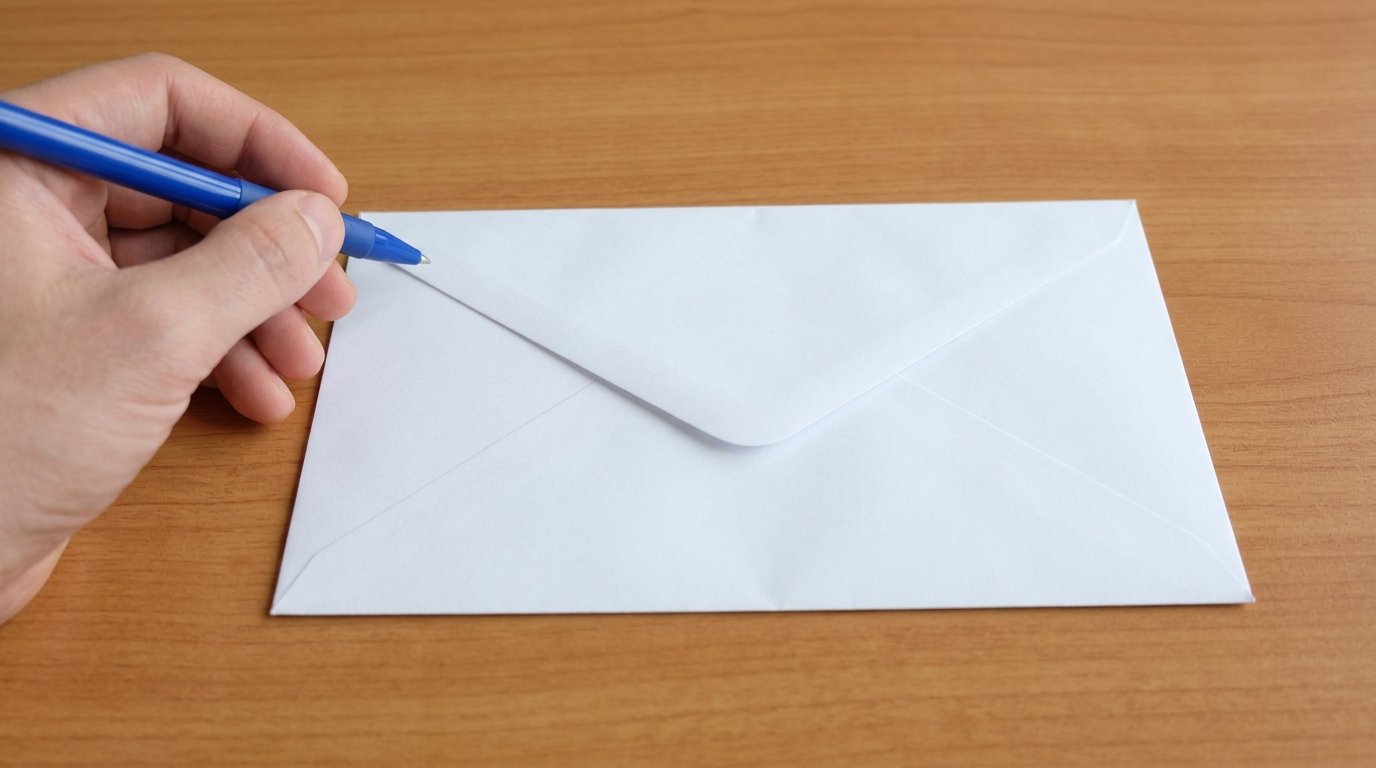
The recipient address appears in the center front portion of the envelope. This positioning helps postal systems process mail efficiently through automated scanning systems.
The return address belongs in the upper-left corner. It identifies the sender and ensures undeliverable mail can return correctly if necessary.
Postage occupies the upper-right corner.
Although this structure seems simple, formatting accuracy matters significantly because postal systems rely increasingly on machine readability rather than manual sorting alone.
Clear spacing, consistent alignment, and readable handwriting improve delivery reliability substantially.
Why Formatting Matters More Than Ever
Ironically, as physical mail becomes less common, formatting expectations have become more standardized rather than less important.
Modern postal systems process enormous mail volumes using automated scanning technology. Poor formatting can delay delivery, create routing errors, or make addresses difficult for machines to interpret accurately.
This is one reason professional correspondence often uses printed labels or block lettering rather than decorative handwriting styles.
Consistency improves efficiency.
The standard recipient format typically follows this structure:
Recipient Name
Street Address or P.O. Box
City, State, ZIP Code
For international mail, country names usually appear in capital letters on the final line.
While these conventions may appear procedural, they reflect a broader communication principle: clarity reduces friction.
This idea extends beyond mailing systems into business communication, product design, and user experience strategy itself.
The Psychology Behind Professional Presentation
Addressing an envelope correctly may seem minor, but presentation shapes perception quickly.
People instinctively evaluate visual organization before reading content. Clean formatting, balanced spacing, and legible writing communicate professionalism and care subconsciously.
This matters especially in business environments where trust often develops through small signals.
A poorly addressed envelope can unintentionally suggest disorganization or lack of attention to detail. Conversely, a polished envelope creates anticipation and credibility before the recipient even opens it.
Luxury brands understand this principle deeply. Packaging design, envelope texture, typography, and presentation all influence emotional response before the core message appears.
Physical correspondence functions partly as visual communication.
Formal vs. Informal Addressing Styles
One important aspect of how to address an envelope involves adjusting formality based on context.
Professional and formal correspondence typically includes full names and appropriate titles such as:
Mr.,
Ms.,
Dr.,
Professor,
or official organizational roles.
Informal personal mail allows more flexibility and personality.
However, modern etiquette has evolved significantly regarding names and titles. Many people now prefer first names in professional settings, while others value traditional honorifics. Understanding recipient preference matters more than rigid etiquette rules alone.
Context determines tone.
Wedding invitations, legal notices, and official business correspondence usually require higher levels of formality. Birthday cards, casual notes, and creative mailings may intentionally feel more relaxed.
The envelope itself communicates relationship dynamics before any written message appears inside.
Common Addressing Mistakes
Many mailing issues result from surprisingly simple mistakes.
Incomplete apartment numbers remain one of the most frequent causes of failed delivery in urban environments. Incorrect ZIP codes also create major routing delays because postal systems rely heavily on numerical sorting.
Illegible handwriting presents another common problem. While handwritten envelopes feel personal, readability must remain the priority.
Other frequent errors include:
missing return addresses,
incorrect directional abbreviations,
improper international formatting,
and overcrowded layouts.
The goal is functional clarity rather than decorative complexity.
| Envelope Element | Correct Placement | Common Mistake |
|---|---|---|
| Return address | Upper-left corner | Missing sender information |
| Recipient address | Center front area | Misaligned formatting |
| Postage stamp | Upper-right corner | Incorrect placement |
| Apartment/unit number | Same line as street address | Leaving it out entirely |
| ZIP/postal code | Final address line | Wrong or incomplete code |
Attention to these details improves both efficiency and professionalism.
International Mailing Requires Additional Care
Global business and remote work have increased international correspondence significantly.
International envelopes require additional formatting precision because postal systems vary across countries. However, one principle remains universal: clarity for the destination country’s postal service.
The destination country should appear prominently on the final line in uppercase letters when mailing internationally.
Address order also differs globally. Some countries place postal codes before cities, while others reverse building and street numbering structures.
For international business communication especially, verifying local formatting conventions demonstrates cultural awareness and professionalism.
In global markets, small details influence credibility more than many people realize.
Why Handwritten Mail Feels Increasingly Valuable
One reason physical correspondence remains emotionally powerful is scarcity.
People receive countless digital messages daily, most of which disappear quickly into crowded inboxes. Handwritten or thoughtfully addressed mail feels rare by comparison.
This rarity creates emotional impact.
Research consistently shows that physical experiences generate stronger memory retention than purely digital interactions. Tangible objects engage multiple senses simultaneously, making them psychologically more memorable.
A carefully addressed envelope therefore becomes part of the communication experience itself rather than merely packaging.
This is especially important in relationship-driven industries such as luxury retail, consulting, fundraising, publishing, and executive networking.
Thoughtful presentation communicates investment.
The Connection Between Detail and Trust
Entrepreneurs and founders often underestimate how strongly operational detail influences perception.
Addressing an envelope properly may seem unrelated to leadership or business strategy, but both depend on the same underlying principle:
precision communicates reliability.
Customers, clients, and investors frequently evaluate organizations through small interactions rather than major declarations. Delayed responses, formatting inconsistencies, unclear messaging, and overlooked details all shape trust incrementally.
Physical correspondence amplifies this effect because presentation becomes immediately visible.
In many ways, envelope etiquette represents a broader philosophy of communication quality.
Technology Has Changed Mailing—Not Eliminated It
Digital tools have transformed mailing systems rather than replacing them entirely.
Online postage platforms, automated label printers, CRM-integrated mailing systems, and logistics software now streamline physical correspondence for businesses of every size.
Yet despite technological efficiency, the emotional value of tangible communication remains deeply human.
This coexistence reflects a larger pattern visible across modern life. Technology optimizes convenience, but people still crave experiences that feel intentional and personal.
The continued relevance of handwritten notes, luxury packaging, printed invitations, and formal mail demonstrates that efficiency alone does not define meaningful communication.
Why Small Skills Still Matter
One reason people increasingly search for how to address an envelope is that many practical analog skills have faded from everyday life.
Digital systems automate tasks previous generations learned routinely:
map reading,
check writing,
memorization,
physical filing,
and formal mailing.
Yet these skills retain value because they connect people to foundational communication systems underlying modern society.
More importantly, learning them builds adaptability.
People who understand both digital and physical communication environments navigate professional and social situations more confidently.
Conclusion: The Lasting Relevance of Addressing an Envelope
Learning how to address an envelope correctly may appear simple, but the skill reflects broader ideas about communication, professionalism, and human connection.
Physical mail still matters because certain messages deserve permanence, intention, and tangible presence. In business and personal life alike, thoughtfully presented correspondence creates emotional and psychological impact that digital communication rarely replicates fully.
The envelope itself becomes part of the message.
In a world increasingly optimized for speed, small acts of care stand out more than ever. Clear formatting, proper presentation, and attention to detail communicate respect before a single word inside the envelope is read.
And perhaps that is why this seemingly old-fashioned skill continues holding modern relevance. Beneath the technical formatting rules lies something timeless: the understanding that how people deliver messages still shapes how those messages are received.