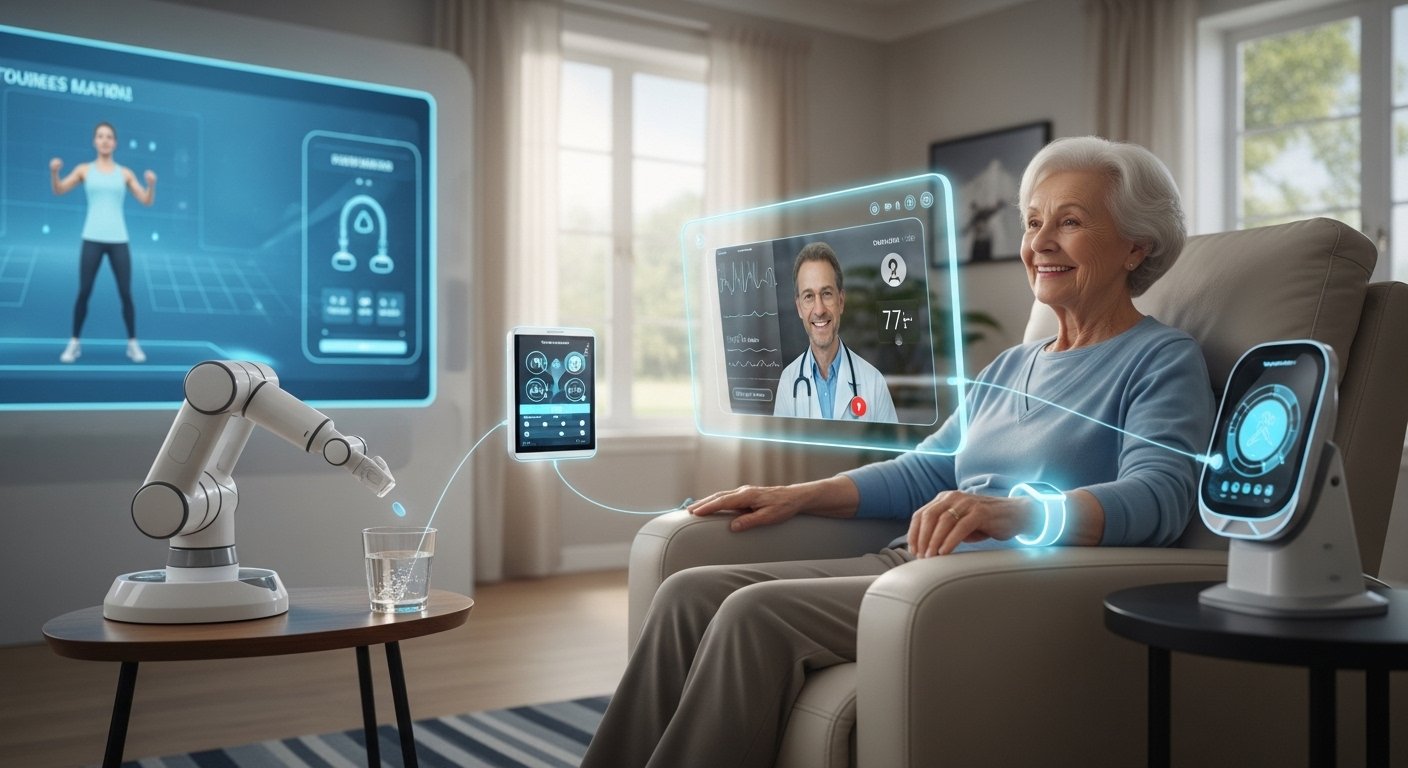
On a quiet morning in a suburban neighborhood, an elderly woman named Margaret begins her day much like anyone else. She makes tea, reads the news on her tablet, and checks a small device on her wrist that tracks her heart rhythm. Just a decade ago, Margaret would have needed frequent hospital visits to monitor her condition. Today, her doctor can review her health data remotely, receive alerts if anything unusual occurs, and adjust her treatment plan without requiring her to leave home.
This simple daily routine illustrates how future healthcare technology is elevating at home care. What was once considered advanced hospital-level monitoring is increasingly available in living rooms, bedrooms, and even wearable devices. For entrepreneurs, healthcare innovators, and technology leaders, this transformation represents one of the most significant shifts in modern medicine.
As digital tools, artificial intelligence, and connected devices become more sophisticated, the concept of home care is evolving from basic assistance into a comprehensive health management system.
The Shift Toward Home-Based Healthcare
For much of modern history, healthcare has revolved around centralized institutions. Hospitals and clinics served as the primary hubs for diagnosis, monitoring, and treatment. While this model provided structure and expertise, it often came with limitations—long travel times, crowded facilities, and high costs.
Over the past several years, however, a new paradigm has emerged. Technological innovation has made it possible to deliver high-quality healthcare services outside traditional medical settings.
Understanding how future healthcare technology is elevating at home care requires recognizing a broader shift in healthcare philosophy. Rather than requiring patients to travel to care, care itself is becoming mobile, flexible, and digitally connected.
This transition is particularly important for aging populations and individuals with chronic conditions who benefit from continuous monitoring rather than occasional hospital visits.
The Technologies Driving the Transformation
Several technological developments are working together to make advanced home healthcare possible.
Wearable devices are among the most visible innovations. These tools track vital signs such as heart rate, sleep patterns, blood oxygen levels, and activity levels. Many devices now integrate with healthcare platforms, allowing physicians to review patient data in real time.
Remote monitoring systems represent another important breakthrough. These systems include smart medical devices that measure blood pressure, glucose levels, and respiratory health. Instead of recording information manually, the devices automatically transmit data to healthcare providers.
Artificial intelligence is also playing a growing role. By analyzing large volumes of patient data, AI systems can detect patterns that might signal emerging health issues. Early detection allows doctors to intervene sooner, often preventing serious complications.
Together, these technologies demonstrate how future healthcare technology is elevating at home care by shifting medicine from reactive treatment to proactive health management.
Remote Monitoring: The Backbone of Modern Home Care
Among the many innovations shaping healthcare, remote monitoring has perhaps the most immediate impact on patients’ daily lives.
In traditional healthcare models, monitoring often happens during scheduled appointments. Doctors check vital signs, review symptoms, and make adjustments as needed. While effective, this approach provides only snapshots of a patient’s health.
Remote monitoring changes that dynamic entirely.
By continuously collecting health data, modern monitoring systems provide a more complete picture of patient well-being. Physicians can observe long-term trends, identify subtle changes, and respond quickly when warning signs appear.
For patients managing chronic illnesses such as diabetes, heart disease, or respiratory conditions, this continuous oversight provides reassurance and improved safety.
More importantly, it reduces unnecessary hospital visits and allows individuals to maintain independence while receiving professional care.
Artificial Intelligence and Predictive Healthcare
Artificial intelligence has become one of the most powerful forces behind healthcare innovation.
When integrated into home health platforms, AI can analyze data from wearables, monitoring devices, and medical histories. This analysis helps identify patterns that human observers might overlook.
For example, slight changes in sleep patterns combined with heart rate variability might indicate early signs of cardiovascular stress. AI systems can flag these indicators and alert healthcare professionals before symptoms become severe.
This predictive capability demonstrates another dimension of how future healthcare technology is elevating at home care. Instead of responding only when patients become ill, healthcare providers can act earlier and prevent many conditions from worsening.
The result is a more preventative approach to medicine—one that prioritizes long-term health rather than emergency treatment.
Telemedicine Expanding Access to Care
Telemedicine has rapidly evolved from a convenient option to a fundamental component of healthcare delivery.
Video consultations, digital health portals, and secure messaging platforms now allow patients to communicate with doctors from home. For individuals living in rural areas or regions with limited medical infrastructure, this access can be life-changing.
Beyond convenience, telemedicine also improves efficiency for healthcare providers. Doctors can conduct follow-up visits, review test results, and manage chronic conditions without requiring patients to travel long distances.
In many cases, telemedicine serves as the gateway to broader home care systems. A virtual consultation might lead to remote monitoring setup, wearable device integration, or digital therapy programs.
This interconnected ecosystem further demonstrates how future healthcare technology is elevating at home care by turning the home into a central hub for medical support.
Smart Homes and Integrated Health Systems
Another emerging trend in healthcare technology involves the integration of medical monitoring into smart home environments.
Modern homes increasingly feature connected devices—voice assistants, smart lighting, motion sensors, and automated climate systems. These technologies, originally designed for convenience, are now being adapted for healthcare purposes.
Motion sensors can detect unusual inactivity that may indicate a fall or medical emergency. Smart medication dispensers remind patients when to take prescriptions. Voice assistants can connect users directly with healthcare providers or emergency services.
These integrated systems create environments where health monitoring happens quietly in the background. Patients maintain independence while benefiting from subtle layers of protection and support.
Key Technologies Elevating At-Home Healthcare
| Technology | Role in Home Healthcare | Impact on Patients |
|---|---|---|
| Wearable Devices | Track vital signs and daily activity | Continuous health awareness |
| Remote Monitoring Tools | Transmit medical data to healthcare providers | Early detection of health issues |
| Artificial Intelligence | Analyze patient data for patterns | Predictive and preventative care |
| Telemedicine Platforms | Enable remote consultations | Greater accessibility to doctors |
| Smart Home Integration | Detect emergencies and assist daily routines | Improved safety and independence |
This combination of technologies creates a comprehensive ecosystem that supports patients outside traditional clinical environments.
Opportunities for Entrepreneurs and Innovators
The evolution of home-based healthcare represents a massive opportunity for entrepreneurs and technology leaders.
Healthcare systems around the world face rising costs, aging populations, and increasing demand for services. Technologies that improve efficiency while maintaining quality are becoming essential.
Startups are already developing platforms that combine wearable sensors, AI diagnostics, and digital health records into unified systems. Others are building specialized solutions focused on chronic disease management, elderly care, or rehabilitation.
For founders exploring healthcare innovation, understanding how future healthcare technology is elevating at home care can reveal valuable market opportunities.
Solutions that improve patient autonomy while supporting healthcare professionals will likely play a major role in the next generation of medical technology.
Challenges and Ethical Considerations
Despite its promise, the expansion of home healthcare technology raises important questions.
Data privacy is one of the most significant concerns. Continuous monitoring generates large volumes of sensitive health information, and protecting that data is critical.
Another challenge involves digital accessibility. Not all patients are comfortable using advanced technology, and some may lack reliable internet access.
Healthcare providers must also ensure that technology enhances rather than replaces human care. Compassion, empathy, and personal interaction remain essential elements of effective medical treatment.
Balancing technological innovation with ethical responsibility will be key to building trust in the future healthcare ecosystem.
The Road Ahead for At-Home Healthcare
The healthcare industry is entering a period of profound transformation. Advances in digital technology, artificial intelligence, and connected devices are redefining how medical care is delivered.
In the coming years, the home may become one of the most important healthcare environments. Instead of waiting for illness to occur, healthcare systems will focus on maintaining wellness through continuous monitoring and preventative strategies.
Understanding how future healthcare technology is elevating at home care helps illuminate this new vision of medicine—one that prioritizes accessibility, efficiency, and patient empowerment.
As innovation continues, the line between healthcare institutions and everyday living spaces will grow increasingly blurred.
Conclusion: A New Era of Patient-Centered Care
Margaret’s morning routine—once unimaginable outside a hospital setting—represents a broader shift in healthcare philosophy.
Technology is transforming the home into a connected health environment where monitoring, diagnosis, and consultation can happen seamlessly. Patients gain independence while doctors gain deeper insights into long-term health patterns.
For entrepreneurs, innovators, and healthcare leaders, this transformation offers both opportunity and responsibility.
The challenge is not simply to build new tools, but to design systems that truly enhance patient well-being.
As technology continues to evolve, one thing becomes clear: the future of healthcare will not be confined to hospitals. Instead, it will increasingly live where patients feel most comfortable—at home.