
Navigating the world of measurements can be a tricky endeavor, especially when it comes to understanding different units like milliliters and milligrams. While they may sound similar, these two metrics serve distinct purposes and are used in various fields—from cooking to pharmaceuticals. Whether you’re whipping up a new recipe or accurately dosing medication, knowing the difference between milliliters and milligrams is essential for achieving precision in your tasks. Join us as we dive into the key differences between these two important units of measurement!
Understanding the Metric System
The metric system is a decimal-based system of measurement used around the world. It simplifies calculations by using units that are primarily based on powers of ten. This universality makes it easier to convert between different measures.
At its core, the metric system includes fundamental units like meters for length, liters for volume, and grams for weight. Each unit can be modified with prefixes such as milli-, centi-, or kilo- to denote fractions or multiples.
For example, one milliliter equals one-thousandth of a liter. Similarly, one milligram represents one-thousandth of a gram. The beauty lies in how these measurements seamlessly connect within the broader framework of science and daily life.
Using the metric system fosters clearer communication across various disciplines—whether it’s cooking recipes from different cultures or scientific research shared globally. Understanding its structure opens up a world where precision reigns supreme.
What is a Milliliter?
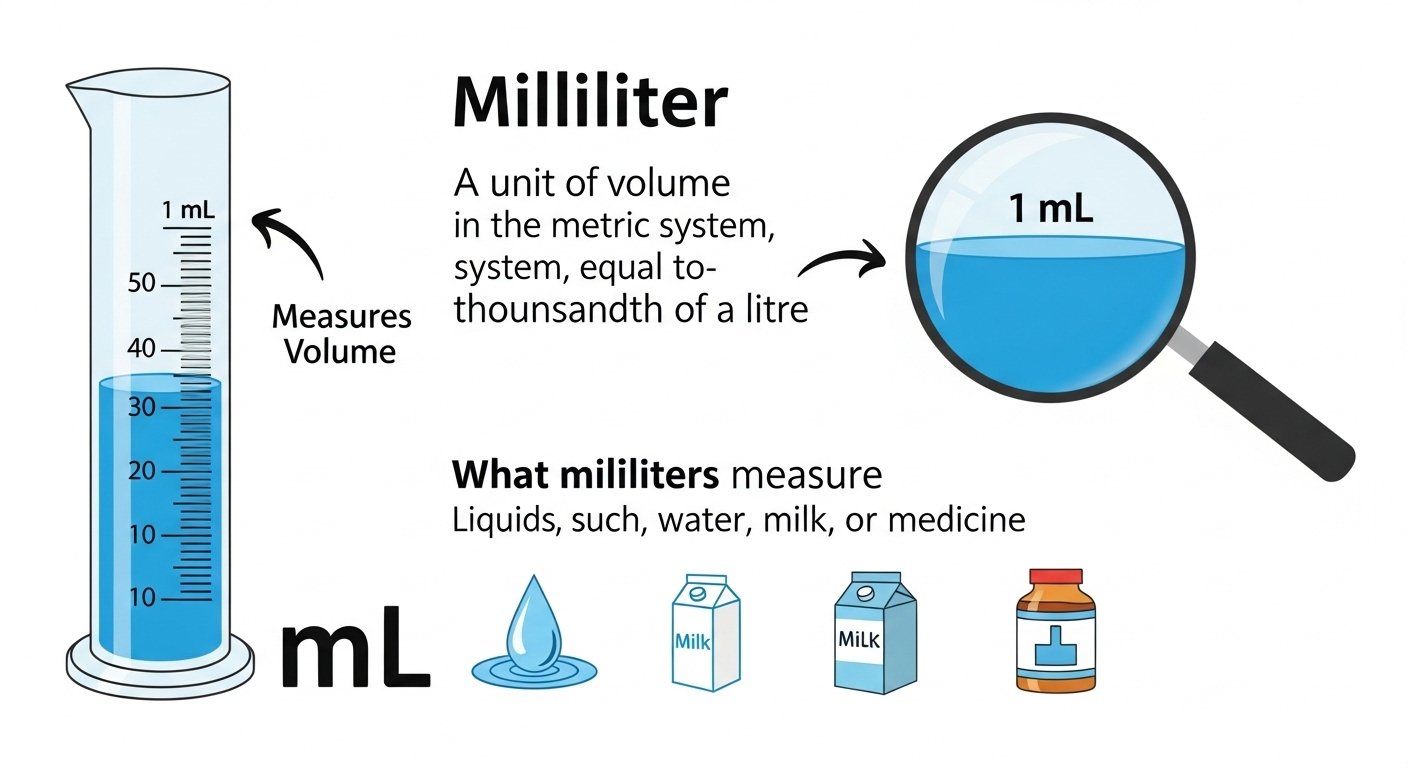
A milliliter (mL) is a unit of volume in the metric system. It measures how much space a liquid occupies.
One milliliter is equal to one-thousandth of a liter. This makes it an ideal choice for small quantities. Whether you’re baking or mixing chemicals, precision matters.
You might encounter milliliters frequently in recipes and medicine dosages. For instance, many cough syrups list their dosage in mL for accuracy.
Milliliters can easily be visualized using kitchen measuring spoons or graduated cylinders. Just remember that 1 mL roughly equals a drop from most droppers.
In scientific settings, this measurement helps ensure experiments yield consistent results. Understanding milliliters simplifies tasks where precise liquid measurements are crucial.
What is a Milligram?
A milligram is a unit of mass in the metric system. It represents one-thousandth of a gram, making it exceptionally lightweight. This tiny measurement is often used to quantify very small amounts in cooking, science, and medicine.
For instance, when dosing medication, precision matters. Milligrams provide accuracy that can be critical for effective treatment.
In nutritional labeling, you might see milligrams listed for vitamins or minerals. These details help consumers understand their intake better.
Milligrams are essential in laboratory settings too. Scientists rely on this measurement when working with chemicals or substances that require exact quantities for experiments.
Despite its small size, the milligram plays an important role across various fields by ensuring precise measurements where larger units would not suffice.
The Conversion Factor
To understand the relationship between milliliters and milligrams, one must grasp their conversion factor. Though both units belong to the metric system, they measure different things.
A milliliter measures volume while a milligram measures mass. The key lies in the substance being measured.
For example, water has a density of 1 gram per milliliter. Thus, 1 milliliter of water weighs approximately 1000 milligrams. This straightforward correlation makes conversions simple when dealing with liquids like water.
However, other substances can complicate this process due to varying densities. For instance, oils or syrups will have different weights for the same volume compared to water.
Knowing how to find these conversion factors is essential for accurate measurements in cooking or any scientific work involving liquids and solids alike.
Common Uses of Milliliters and Milligrams
Milliliters and milligrams serve distinct purposes across various fields.
In cooking, recipes often call for ingredients in milliliters, especially liquids like water or oil. Precision matters here; a small error can alter the taste or texture of a dish.
Healthcare professionals frequently utilize milligrams to measure medication dosages. Accurate dosing is crucial for patient safety, making this unit essential in pharmaceutical applications.
In scientific research, both units play vital roles. Researchers use milliliters when measuring liquid samples and milligrams when weighing solid substances. This ensures experiments yield reliable results.
Cosmetics also rely on these measurements. Products may list their contents in either unit on labels, helping consumers understand what they are using.
From kitchens to laboratories and pharmacies, understanding how and why these measurements differ enhances clarity in various contexts.
How to Measure and Convert ML to MG and Vice Versa
Measuring milliliters (mL) and milligrams (mg) accurately is crucial in various fields, from cooking to pharmaceuticals.
To convert mL to mg, knowing the density of the substance is key. For water, 1 mL equals approximately 1000 mg due to its density. In contrast, heavier liquids like honey have a different conversion rate.
When you’re dealing with dry ingredients or powders, it often requires more specific calculations based on their unique densities. A scale can provide precise measurements in mg directly.
If you need quick conversions without manual calculations, online converters and mobile apps are readily available. They simplify the process significantly.
Always ensure your measuring tools are clean for accurate readings. Using proper techniques guarantees reliable results whether cooking or conducting scientific experiments.
Which Unit to Use in Different Situations
Choosing between a milliliter and a milligram often depends on the context of what you’re measuring.
For liquids, such as beverages or medicines, milliliters are your go-to measurement. They provide clarity on how much liquid is in a container or dose.
On the other hand, when dealing with solid substances like powders or grains, you’ll want to use milligrams. This unit gives precise information about weight.
In cooking and baking, both units come into play. Recipes may specify ingredients in milliliters for liquids and in milligrams for spices or flavorings.
When it comes to pharmaceuticals, accuracy is crucial. Liquid medications are dosed in milliliters while tablets may be measured out in milligrams.
Consider the substance’s state—liquid versus solid—and choose accordingly for accurate results every time!
Conclusion
When it comes to understanding the differences between milliliters and milligrams, clarity is key. Both units play crucial roles in various fields like cooking, medicine, and science. Milliliters measure volume, while milligrams quantify weight. Knowing how to convert between these measurements can be essential for accuracy.
Whether you’re measuring out ingredients in a recipe or dosing medication precisely, choosing the right unit matters. Each has its applications and knowing when to use which can make all the difference.
With a grasp of their definitions, conversion factors, and appropriate contexts for use, navigating through metric measurements becomes much simpler. Embracing this knowledge helps you communicate more effectively in any situation that requires precision with quantities.