
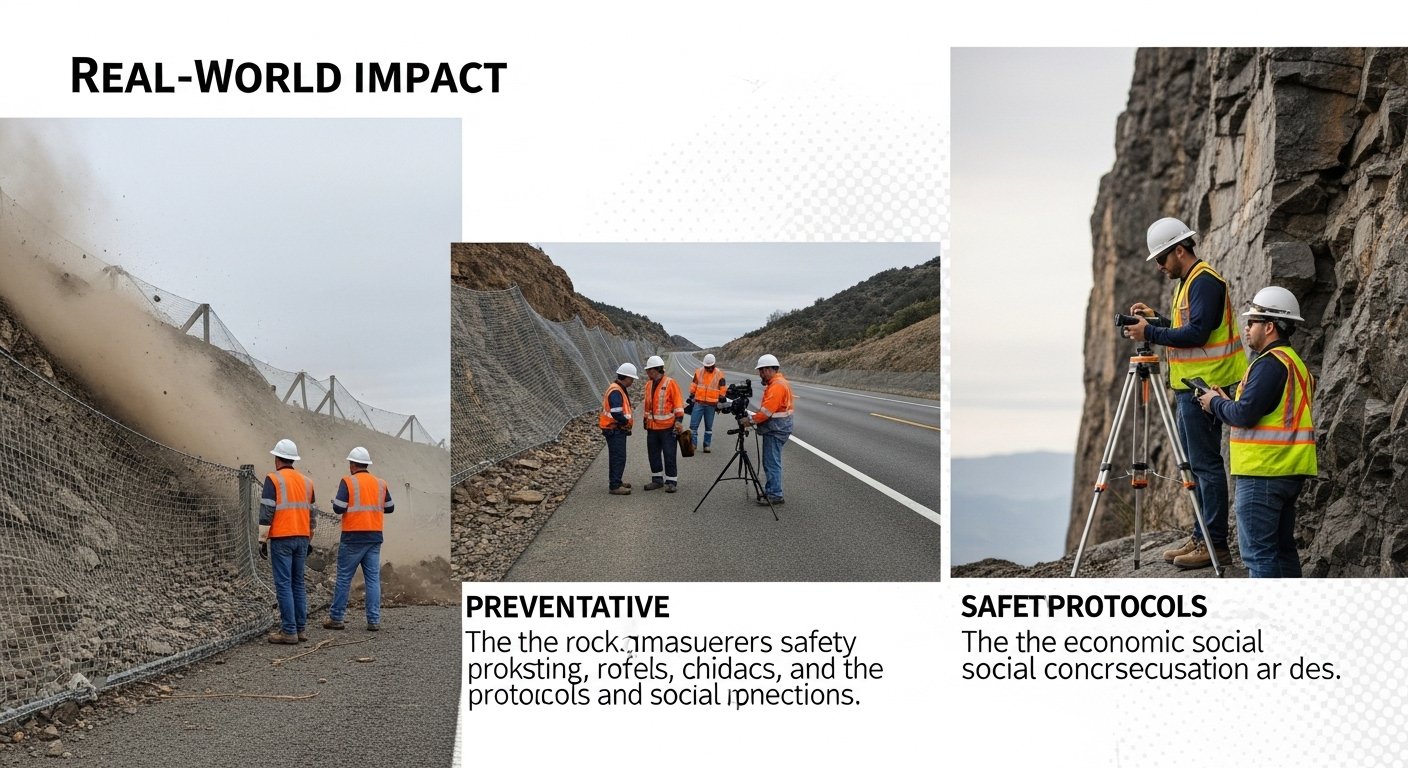
On a construction site overlooking a newly planned highway expansion, engineers paused as a controlled blast echoed across the valley. Moments later, fragments of stone scattered through the air, some landing exactly where expected, others traveling farther than predicted. For geologists and engineers on site, this phenomenon—known as projecting rocks—is both a scientific challenge and a critical safety concern.
In industries ranging from mining and construction to geology and infrastructure development, projecting rocks are a common but complex reality. Whether caused by natural geological forces or human activity such as blasting and excavation, these rock fragments can travel significant distances, creating both opportunities and hazards.
Understanding projecting rocks is not simply a matter of curiosity. It is an important topic for engineers, environmental planners, and entrepreneurs working in sectors where geology intersects with infrastructure development.
What Are Projecting Rocks?
The term projecting rocks generally refers to rocks or rock fragments that are forcefully expelled or displaced from their original location due to external forces. These forces can be natural, such as volcanic activity or landslides, or human-made, such as mining explosions or construction blasting.
In many cases, projecting rocks occur when energy stored in rock formations is suddenly released. This energy can come from pressure, impact, or explosive forces, causing pieces of rock to break free and travel through the air.
For engineers and geologists, understanding how and why rocks are projected is crucial for safety planning. The speed, direction, and distance of these fragments depend on multiple variables including rock density, explosive force, geological structure, and surrounding terrain.
These variables make predicting projecting rocks both a scientific challenge and an engineering priority.
The Science Behind Rock Projection
To fully understand projecting rocks, it is necessary to explore the physical forces that cause them to move. When rock formations experience sudden stress—whether from natural geological pressure or explosive activity—the material can fracture violently.
At the moment of fracture, several forces interact:
- Kinetic energy generated by explosions or pressure release
- Gravity influencing the trajectory of rock fragments
- Air resistance slowing fragments as they travel
- Structural weaknesses in the rock that determine how it breaks
When these forces combine, rocks can be launched at surprisingly high speeds.
In mining or quarry operations, blasting creates controlled explosions designed to break apart rock formations. However, if energy distribution is uneven, fragments may be propelled beyond the intended area.
This phenomenon is commonly known as flyrock, one of the most recognized examples of projecting rocks in industrial settings.
Natural Causes of Projecting Rocks
While construction and mining activities often produce projecting rocks, nature itself can generate even more dramatic examples.
Volcanic eruptions provide one of the clearest illustrations. During an eruption, molten material and solid rock fragments are violently expelled from the earth’s surface. These projectiles can travel hundreds or even thousands of meters from the eruption site.
Another natural cause is rockfalls in mountainous regions. When weathering weakens cliff faces or slopes, large pieces of rock may break free and fall or bounce downhill at high speeds.
Seismic activity can also contribute to projecting rocks. Earthquakes destabilize rock formations, causing fragments to be displaced suddenly.
These natural processes demonstrate that projecting rocks are a fundamental part of Earth’s dynamic geology.
Projecting Rocks in Construction and Mining
In industrial environments, projecting rocks are most commonly associated with blasting operations. Construction companies and mining organizations use explosives to break large rock masses into manageable fragments.
When conducted correctly, blasting is a highly controlled process. Engineers carefully calculate explosive placement, timing, and energy distribution to minimize unintended rock projection.
However, even with advanced planning, unpredictable geological conditions can sometimes produce unexpected results.
Factors influencing rock projection in blasting include:
- Rock density and fracture patterns
- Explosive type and placement
- Weather conditions
- Terrain shape and slope
- Containment measures such as blast mats
Because of these variables, companies invest heavily in safety protocols designed to reduce the risks associated with projecting rocks.
Safety Measures to Control Rock Projection
Preventing dangerous rock projection is a priority in industries that rely on blasting or excavation. Engineers use several strategies to minimize risks and ensure that operations remain safe.
One common approach is blast design optimization. By carefully calculating the amount of explosive material used and positioning it strategically within drilled holes, engineers can direct energy toward breaking rock rather than projecting it outward.
Another method involves the use of protective barriers or blast mats, which help contain rock fragments during explosions.
In addition, safety zones are established around blast sites to ensure that workers and equipment remain at safe distances.
These measures reflect a broader industry commitment to risk management and responsible operations.
Technological Innovations in Predicting Rock Projection
Technology has dramatically improved the ability to analyze and predict projecting rocks. Modern engineering tools now allow professionals to simulate blasting scenarios before any explosives are used.
Computer modeling software can evaluate geological conditions and estimate the likely trajectory of rock fragments. This predictive capability allows engineers to refine their plans and reduce potential hazards.
Drones and remote sensing technologies also play an increasing role in monitoring blast sites and surveying terrain after operations.
The integration of technology into geological engineering highlights how innovation continues to improve safety and efficiency in traditionally hazardous industries.
Key Factors Influencing Rock Projection Distance
To better understand how projecting rocks behave, it helps to examine the variables that influence how far rock fragments can travel.
| Factor | Description | Impact on Rock Projection |
|---|---|---|
| Explosive Force | Amount of energy released during blasting | Greater force increases projection distance |
| Rock Density | Strength and composition of rock | Denser rock may break into heavier fragments |
| Terrain Shape | Slopes, cliffs, and surrounding landforms | Terrain can redirect rock trajectories |
| Weather Conditions | Wind and atmospheric pressure | Can slightly alter projectile paths |
| Containment Measures | Blast mats or barriers | Reduce projection range significantly |
Understanding these variables allows engineers to design safer blasting operations and minimize unintended consequences.
Environmental Considerations
Beyond safety concerns, projecting rocks can also have environmental impacts. When rock fragments travel outside designated blast zones, they may damage nearby vegetation, wildlife habitats, or infrastructure.
Environmental regulations in many countries require mining and construction companies to carefully assess the potential impact of blasting operations.
These assessments often include:
- Risk analysis of rock projection zones
- Monitoring of nearby ecosystems
- Implementation of mitigation strategies
Responsible management ensures that industrial activities do not create unnecessary environmental harm.
Lessons for Entrepreneurs and Industry Innovators
For entrepreneurs and technology innovators, the study of projecting rocks offers a compelling example of how science, engineering, and risk management intersect.
Industries such as mining, infrastructure development, and construction depend on precise planning and advanced technology to manage complex physical forces.
Startups working in areas like predictive modeling, geospatial analytics, and environmental monitoring are increasingly contributing solutions that improve safety and efficiency in these sectors.
In this way, geological engineering challenges create opportunities for innovation.
The Future of Rock Projection Management
As technology continues to evolve, new tools are emerging that promise even greater control over blasting operations and geological analysis.
Artificial intelligence systems are beginning to analyze geological data in ways that were previously impossible. These systems can identify patterns in rock formations and predict how different materials will behave under stress.
Autonomous monitoring systems may also play a role in future mining operations, providing real-time data about rock movement and potential hazards.
These innovations represent the next step in managing projecting rocks safely and effectively.
Conclusion: A Hidden but Critical Engineering Challenge
While the phrase projecting rocks may sound simple, the phenomenon involves complex interactions between geology, physics, and engineering. From volcanic eruptions to construction blasting, the movement of rock fragments is a natural and industrial reality that requires careful management.
For engineers and planners, understanding these dynamics is essential for protecting workers, communities, and the environment.
For entrepreneurs and technology innovators, the challenge represents an opportunity to develop smarter tools and systems that improve safety and efficiency across multiple industries.
Ultimately, projecting rocks remind us that even the most solid materials on Earth can behave unpredictably when powerful forces are involved—and understanding those forces is the key to working safely with the planet’s geological foundations.